Lost City Sierra Ascent
Sierra Nevada de Santa Marta
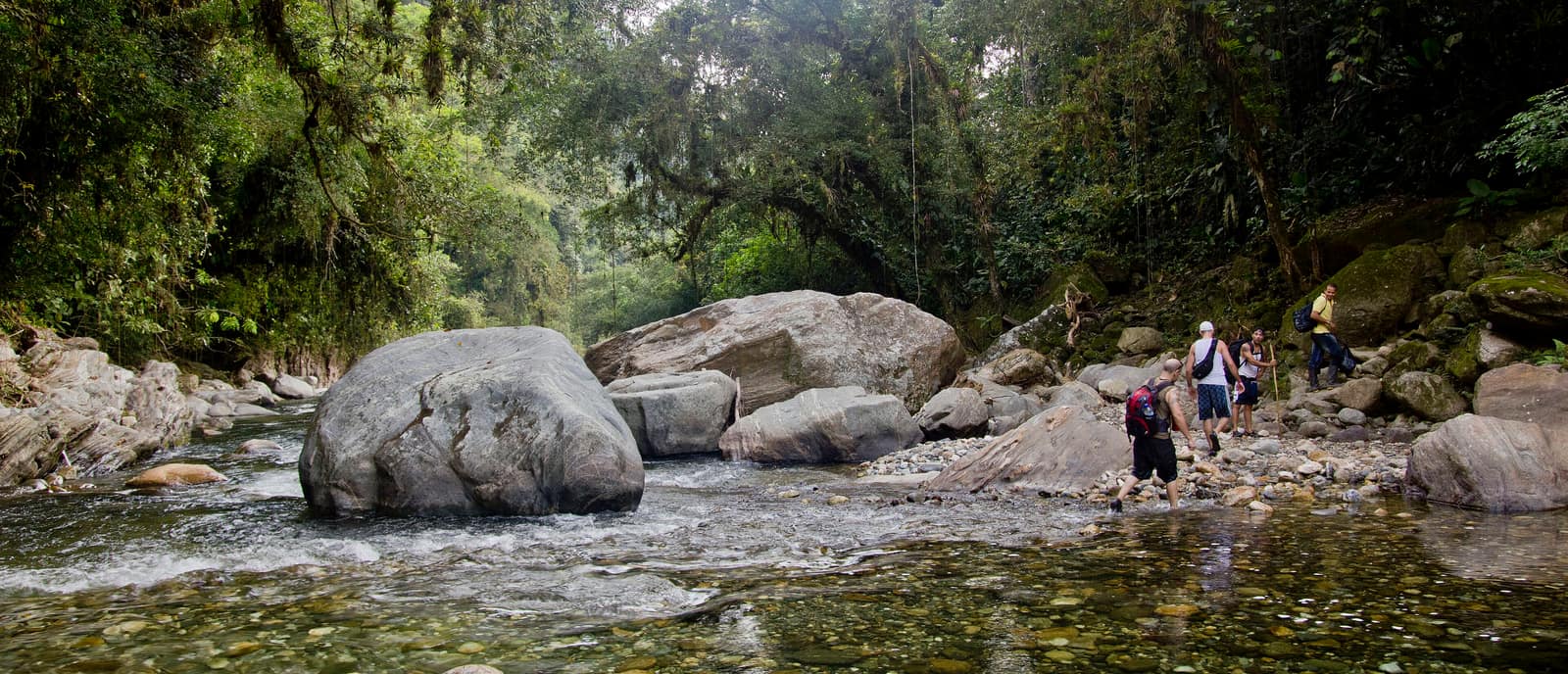
Multi-day trek to Ciudad Perdida through river crossings and jungle stairs. Stone terraces emerge where the forest breaks.
- Days
- 7
- Effort
- Challenging
- Window
- Dec–Mar
- From
- $5,200
The ground
Teyuna, Ciudad Perdida, was built from around the 8th century by the Tairona, several hundred years before Machu Picchu, and abandoned during the Spanish period. What survives is terracing, plazas, and stone stairways cut into the ridge above the Buritaca river, reached only on foot.
The trek is four to five days of real work: five to seven hours a day, steep and slick, with unbridged river crossings that rise fast after rain, and roughly 1,200 stone steps at the site itself. It is not high, the site sits between 900 and 1,200 m, and the difficulty is entirely heat, humidity, and mud.
The trail crosses Arhuaco, Kogui, Wiwa, and Kankuamo territory, and access exists because those communities allow it. Guides are mandatory, the route is unmarked, and only operators authorised by ICANH and the communities can take you in.
Teyuna (Ciudad Perdida), Sierra Nevada de Santa Marta, Magdalena, Colombia. Working elevation runs Trailhead about 200 m · Teyuna 900–1,200 m. That profile shapes sleep, pace, and how early the group needs to move. The published window: December through March is the primary dry window, with a shorter second one in July and August. The park closes annually for indigenous ceremonies and ecosystem recovery, recently in October, and the exact dates are set by the Mamos, so we verify before confirming. Within that window, day order still flexes with weather and access.
Entry is only permitted with an operator authorised by ICANH and the indigenous authorities. The trail is unmarked and guides are mandatory. The site closes annually for several weeks; the month has shifted between September and October in recent years. Semi-private by design. Your guide and party are yours; the camps are shared community infrastructure and cannot be privatised. We are explicit about that rather than implying an exclusive trail. This is the operating shape of the trip: private enough to reorder days, constrained enough that permits and local rules still set the ceiling.
Shape of the days
A shape, not a script. Order and pacing move with weather, permits, and how the first days actually go.
Day 1
Santa Marta preparation: opening
Day 1 sits inside the 1–2 arc titled Santa Marta preparation. Arrival, kit check, and a briefing on protocols with the communities whose land the trail crosses. First night in a good hotel, deliberately. The next four are not. This opening slice sets the logistics and the first read of the ground before the denser days. Arrival and orientation use the published access picture. Entry is only permitted with an operator authorised by ICANH and the indigenous authorities. The trail is unmarked and guides are mandatory. Elevation context for the programme: Trailhead about 200 m · Teyuna 900–1,200 m. Sleep and walk length are graded against that, not against a generic fitness brochure. Early days protect the later ones. We do not burn the group on a full-length day before the body has met the altitude, heat, or boat rhythm this route actually uses. The trek is four to five days of real work: five to seven hours a day, steep and slick, with unbridged river crossings that rise fast after rain, and roughly 1,200 stone steps at the site itself. It is not high, the site sits between 900 and 1,200 m, and the difficulty is entirely heat, humidity, and mud. Geography stays inside Teyuna (Ciudad Perdida), Sierra Nevada de Santa Marta, Magdalena, Colombia. Season logic we plan against: December through March is the primary dry window, with a shorter second one in July and August. The park closes annually for indigenous ceremonies and ecosystem recovery, recently in October, and the exact dates are set by the Mamos, so we verify before confirming. Packing still matters here: Boots with real tread for wet clay,.
Day 2
Santa Marta preparation: continuation
Day 2 sits inside the 1–2 arc titled Santa Marta preparation. Arrival, kit check, and a briefing on protocols with the communities whose land the trail crosses. First night in a good hotel, deliberately. The next four are not. This closing slice of the block consolidates what the earlier days opened, without inventing a new sector. Arrival and orientation use the published access picture. The site closes annually for several weeks; the month has shifted between September and October in recent years. Elevation context for the programme: Trailhead about 200 m · Teyuna 900–1,200 m. Sleep and walk length are graded against that, not against a generic fitness brochure. Early days protect the later ones. We do not burn the group on a full-length day before the body has met the altitude, heat, or boat rhythm this route actually uses. It is not high, the site sits between 900 and 1,200 m, and the difficulty is entirely heat, humidity, and mud. Geography stays inside Teyuna (Ciudad Perdida), Sierra Nevada de Santa Marta, Magdalena, Colombia. Season logic we plan against: December through March is the primary dry window, with a shorter second one in July and August. The park closes annually for indigenous ceremonies and ecosystem recovery, recently in October, and the exact dates are set by the Mamos, so we verify before confirming. Packing still matters here: Boots with real tread for wet clay, river shoes for the crossings, and quick-dry everything.
Days 3–4
Teyuna trek: opening
Days 3–4 continue the Teyuna trek block. Four to five days up the Buritaca: river crossings, jungle staircases, community-run camps, and a full morning on the terraces themselves before the day parties arrive. This opening slice sets the logistics and the first read of the ground before the denser days. Field days stay inside the ground already described for Colombia. The trail crosses Arhuaco, Kogui, Wiwa, and Kankuamo territory, and access exists because those communities allow it. Camps are shared. We upgrade bedding, food, and guiding, we cannot upgrade the infrastructure. Semi-private by design. Your guide and party are yours; the camps are shared community infrastructure and cannot be privatised. Expect a full field day measured in hours on foot, on the water, or in transit between sectors already named above. Private guiding means we can shorten or reorder, not that the underlying constraints disappear. Teyuna, Ciudad Perdida, was built from around the 8th century by the Tairona, several hundred years before Machu Picchu, and abandoned during the Spanish period. What survives is terracing, plazas, and stone stairways cut into the ridge above the Buritaca river, reached only on foot. Geography stays inside Teyuna (Ciudad Perdida), Sierra Nevada de Santa Marta, Magdalena, Colombia. Season logic we plan against: December through March is the primary dry window, with a shorter second one in July and August. The park closes annually for indigenous ceremonies and ecosystem recovery, recently in October, and the exact dates are set by the Mamos, so we verify before confirming. For kit on these days: Boots with real tread for wet clay, river shoes for the crossings, and quick-dry everything.
Days 5–6
Teyuna trek: continuation
Days 5–6 continue the Teyuna trek block. Four to five days up the Buritaca: river crossings, jungle staircases, community-run camps, and a full morning on the terraces themselves before the day parties arrive. This closing slice of the block consolidates what the earlier days opened, without inventing a new sector. Field days stay inside the ground already described for Colombia. Teyuna, Ciudad Perdida, was built from around the 8th century by the Tairona, several hundred years before Machu Picchu, and abandoned during the Spanish period. Entry is only permitted with an operator authorised by ICANH and the indigenous authorities. The trail is unmarked and guides are mandatory. Semi-private by design. Your guide and party are yours; the camps are shared community infrastructure and cannot be privatised. Expect a full field day measured in hours on foot, on the water, or in transit between sectors already named above. Private guiding means we can shorten or reorder, not that the underlying constraints disappear. What survives is terracing, plazas, and stone stairways cut into the ridge above the Buritaca river, reached only on foot. Geography stays inside Teyuna (Ciudad Perdida), Sierra Nevada de Santa Marta, Magdalena, Colombia. Season logic we plan against: December through March is the primary dry window, with a shorter second one in July and August. The park closes annually for indigenous ceremonies and ecosystem recovery, recently in October, and the exact dates are set by the Mamos, so we verify before confirming. For kit on these days: Boots with real tread for wet clay, river shoes for the crossings, and quick-dry everything.
Day 7
Buffer and exit
Day 7 sits inside the 7 arc titled Buffer and exit. A recovery night on the coast or in Minca, then transfer from Santa Marta. The day order inside this block can shift when weather or access forces a rewrite. Exit logistics follow the same transfer pattern already built into the programme. Camps are shared. We upgrade bedding, food, and guiding, we cannot upgrade the infrastructure. International connections should leave buffer after the last field day; late-evening flights only when the ground day is genuinely short. The last day is deliberately lighter where the catalogue allows it, so extraction does not collide with a hard physical ask. The trail crosses Arhuaco, Kogui, Wiwa, and Kankuamo territory, and access exists because those communities allow it. Guides are mandatory, the route is unmarked, and only operators authorised by ICANH and the communities can take you in. Geography stays inside Teyuna (Ciudad Perdida), Sierra Nevada de Santa Marta, Magdalena, Colombia. Season logic we plan against: December through March is the primary dry window, with a shorter second one in July and August. The park closes annually for indigenous ceremonies and ecosystem recovery, recently in October, and the exact dates are set by the Mamos, so we verify before confirming. Packing still matters here: Boots with real tread for wet clay, river shoes for the crossings, and quick-dry everything.
Conditions
Hot and very humid, 26–33 °C, with heavy rain likely outside the dry windows. Camps are fixed hammock-and-bunk sites shared with other authorised parties. River levels dictate crossings and can pause a party for hours.
Fitness bar
Challenging. Sustained steep gradient in high humidity on mud, with river crossings and a long descent. Not high-altitude. The demand is heat tolerance and durable knees.
Best months
December through March is the primary dry window, with a shorter second one in July and August. The park closes annually for indigenous ceremonies and ecosystem recovery, recently in October, and the exact dates are set by the Mamos, so we verify before confirming.
Private or small group
Semi-private by design. Your guide and party are yours; the camps are shared community infrastructure and cannot be privatised. We are explicit about that rather than implying an exclusive trail.
What to bring
Boots with real tread for wet clay, river shoes for the crossings, and quick-dry everything. Dry bags for the four camp nights. Carry cash for community shops on the trail that take nothing else. Pack light; porters carry personal kit but the stairs are the stairs.
High Andes
Access and permits
The constraints that actually decide whether a date is possible.
- Entry is only permitted with an operator authorised by ICANH and the indigenous authorities. The trail is unmarked and guides are mandatory.
- The site closes annually for several weeks; the month has shifted between September and October in recent years.
- Camps are shared. We upgrade bedding, food, and guiding, we cannot upgrade the infrastructure.
Included
- Authorised operator, ICANH site fees, and community access payments
- Wiwa or Kogui guides alongside a private lead guide
- All camps and meals on trek, and porter support for personal kit
- Santa Marta hotel nights either side and all transfers
- Daily field briefings with the lead guide before departure
Not included
- Helicopter access to the site, which we will not arrange
- Any páramo or high-Sierra extension, that zone is closed
- International flights
- Private camps on the trail, which do not exist
- Personal insurance, including medical and evacuation cover
What the price reflects
From $5,200. A standard authorised group trek sells locally for roughly $500–700, and we would rather tell you that than have you discover it. Our band buys a private lead guide, porters, upgraded food and bedding, Santa Marta hotels either side, and a schedule that gets you onto the terraces before the crowd. The trail, the camps, and the permit are the same for everyone. What moves a quote inside that picture is party size, season, and the lodge or camp class actually available for your dates. Semi-private by design. Your guide and party are yours; the camps are shared community infrastructure and cannot be privatised. We are explicit about that rather than implying an exclusive trail. On the included side, the band already assumes items such as: Authorised operator, ICANH site fees, and community access payments; Wiwa or Kogui guides alongside a private lead guide; All camps and meals on trek, and porter support for personal kit. Still outside the band unless we write them in: Helicopter access to the site, which we will not arrange; Any páramo or high-Sierra extension, that zone is closed; International flights. Nothing is confirmed until it is confirmed in writing.
- Party size
- Per-person cost usually falls as the private team is shared across more guests, up to the format limit implied by the guiding and lodge picture. Semi-private by design.
- Season and dates
- Window on the card: Dec–Mar. Planning note: December through March is the primary dry window, with a shorter second one in July and August. The park closes annually for indigenous ceremonies and ecosystem recovery, recently in October, and the exact dates are set by the Mamos, so we verify before confirming. Peak dates inside that window tighten lodge and permit availability, which is what usually pushes a quote toward the top of a published band.
- Lodge or camp class
- Accommodation in the band reflects: All camps and meals on trek, and porter support for personal kit. Moving up or down a class, or shifting to a scarcer property, changes the quote without changing the route.
- Internal transport
- Transfers and regional legs follow the trip design. Watch for: International flights. Charter or peak-season domestic seats, where they apply, sit outside a simple road transfer.
- Permits and access
- Access cost tracks what the ground already requires. Entry is only permitted with an operator authorised by ICANH and the indigenous authorities. We do not invent fee figures beyond what the catalogue already states.
- Outside the band
- Not assumed unless written in: Helicopter access to the site, which we will not arrange; Any páramo or high-Sierra extension, that zone is closed; International flights.
Bands are per person sharing and move with party size, season, and lodge choice. Nothing is confirmed until it is confirmed in writing. How we price.
Where this is
Teyuna (Ciudad Perdida), Sierra Nevada de Santa Marta, Magdalena, Colombia.
Elevation: Trailhead about 200 m · Teyuna 900–1,200 m. Season as published: December–March (primary); often closed October for indigenous ceremonies—verify. Difficulty as assessed: Challenging.
What we checked
Seasons, altitudes, permits, and caps on this page were checked against park authorities, monitoring agencies, and operators on the ground. Where a fact changes with the year, we say so rather than round it off.
Near this
Same terrain, different week
Peru
Andes Shadow Traverse
Cordillera Blanca & Cordillera Huayhuash (Ancash)
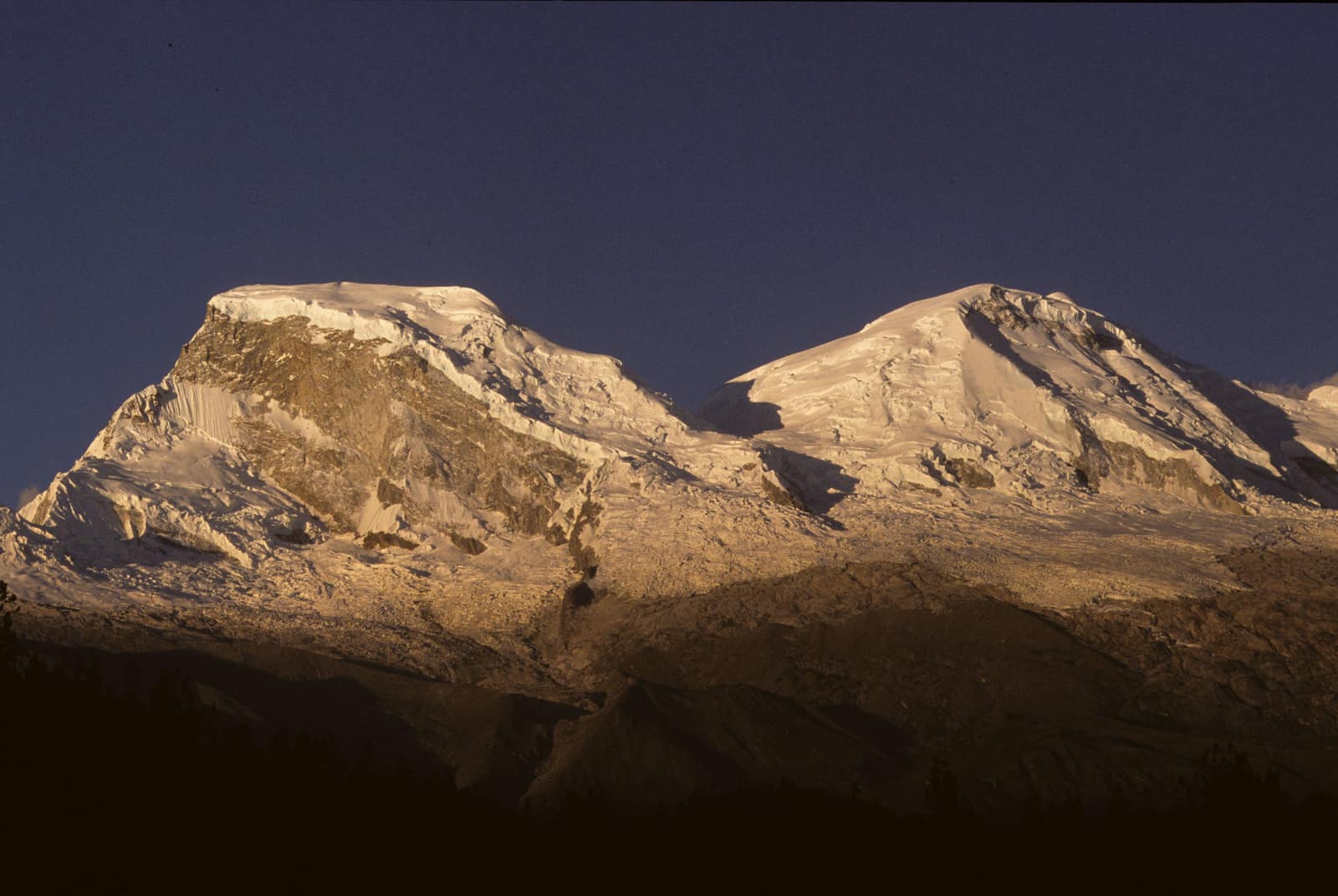
High passes catch first light while glacial valleys still hold cold air. Condors work the ridgelines as you thread camps between ice and stone.
- Duration
- 12 days
- Effort
- Challenging
- Window
- May–Sep
$8,900–$12,500
Detail →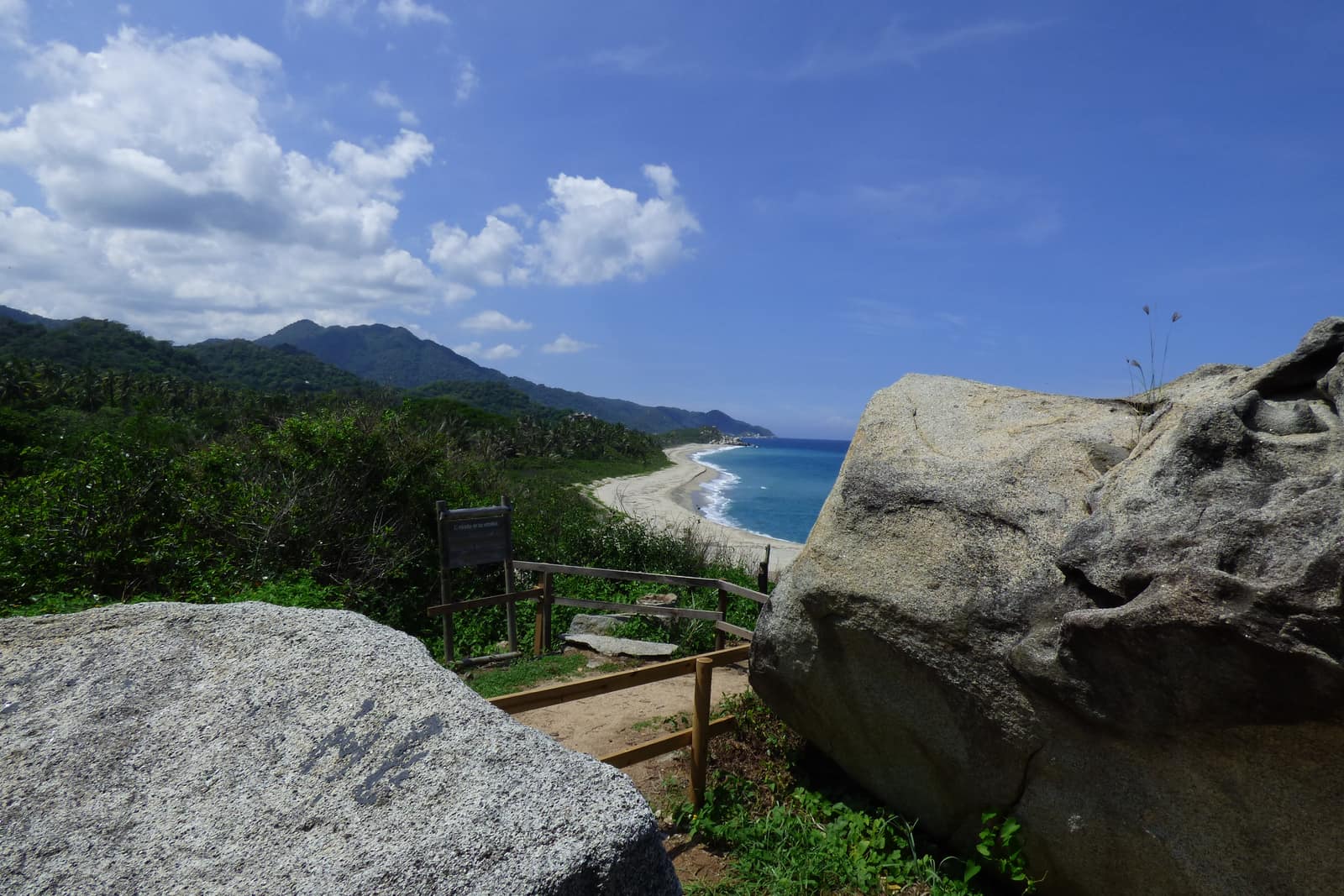
Colombia
Sierra Nevada Caribbean Arc
Sierra Nevada de Santa Marta & Caribbean Coast
Trade winds meet cloud forest on the world's highest coastal range. Authorized mid-elevation trails and Tayrona/Ciudad Perdida corridors—páramo and nevados remain closed sacred territory.
- Duration
- 11 days
- Effort
- Challenging
- Window
- Dec–Mar
$8,500–$12,000
Detail →
Colombia
Coffee Triangle Highland Circuit
Eje Cafetero & Valle de Cocora (Quindío)
Wax palms rise through cloud in Cocora Valley. Fincas open their drying yards; trails link ridgelines above green valleys.
- Duration
- 8 days
- Effort
- Moderate
- Window
- Year-round
$5,100–$7,800
Detail →From the ground
Frames from this route family and country — not a studio set, and not a promise of identical weather.