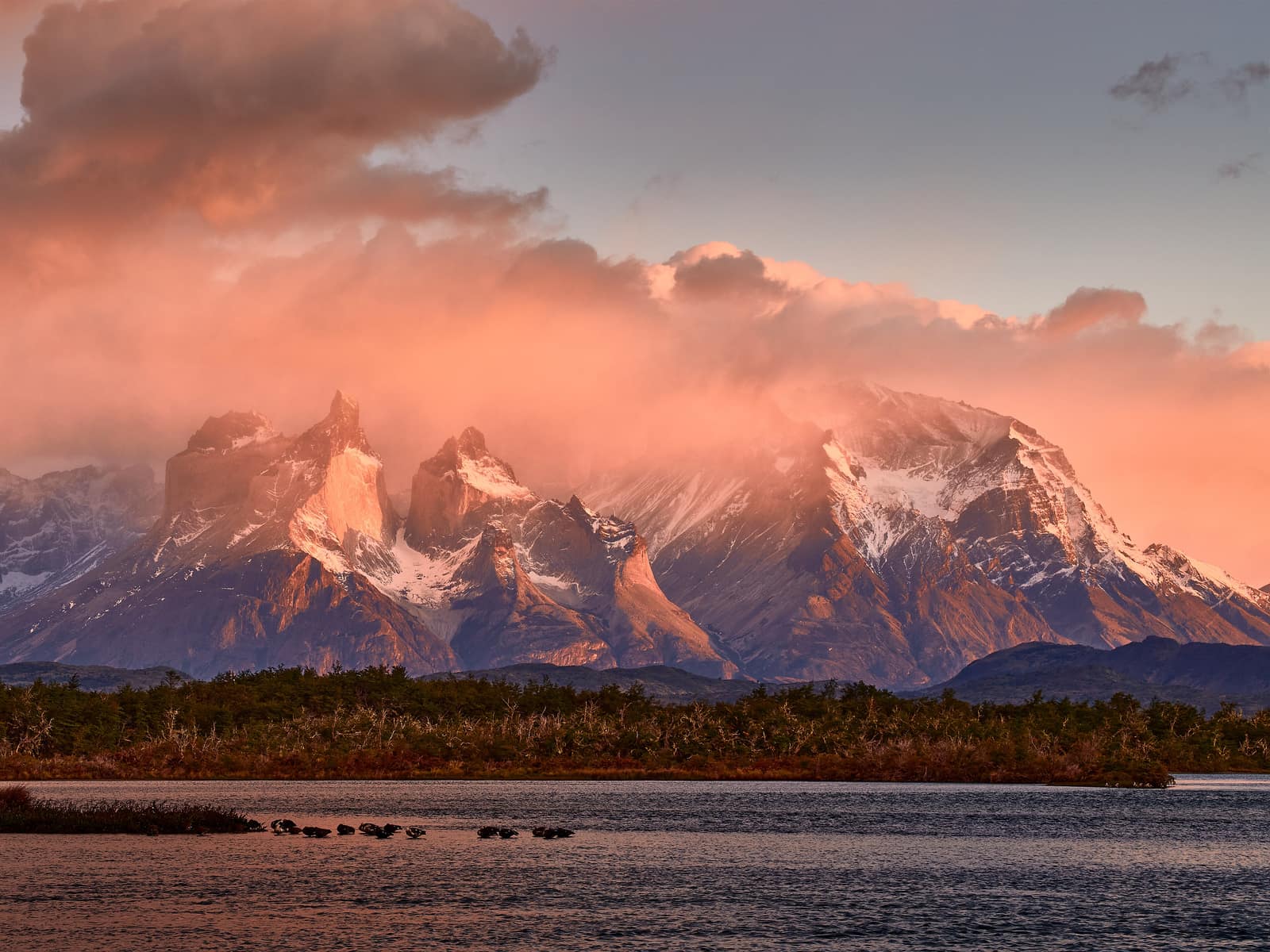
Patagonia Edge Circuit
Torres del Paine & Última Esperanza
Wind scours granite towers while glacial lakes flash turquoise under fast cloud. Each day closes with firelight and the sound of ice calving far off.
- Days
- 12
- Effort
- Challenging
- Window
- Oct–Apr
- From
- $9,500
The ground
Wind is the weather here. It is the hazard, the schedule, and the reason the granite looks the way it does. Torres del Paine sits at the eastern edge of the Southern Patagonian Icefield in Última Esperanza province, and a single day can move through still sun, horizontal sleet, and back again.
The circuit works from lodges and one or two mountain nights rather than a full self-supported loop. That is a deliberate choice: it buys you the flexibility to take the Base Torres approach on the clear morning rather than the scheduled one, and to sit out a 100 km/h day without losing the trip.
Puerto Natales and the Última Esperanza fjords bookend the park days, Serrano and Balmaceda by boat, the Milodón caves, and the estancia country east toward Cerro Castillo where guanaco herds work the fence lines.
Torres del Paine National Park and Última Esperanza province, Magallanes, Chile. Working elevation runs Sea level to 1,200 m; no altitude concern. That profile shapes sleep, pace, and how early the group needs to move. The published window: October to April. December and January are warmest and busiest; March combines settled weather with lighter wind and thinner trails. We do not run this June to August. Within that window, day order still flexes with weather and access.
Park entry must be purchased in advance through Chile's official portal, and rangers check it at the entrance gates. Any night inside the mountain sector requires a confirmed reservation at an authorised refugio or campsite; the park will not let you onto those trails without vouchers for every night. Wild camping is prohibited. Private guiding throughout, lodge-based. Small-group departures of up to ten run in December and February. We tell you plainly which nights are lodge and which are mountain refuge before you commit. This is the operating shape of the trip: private enough to reorder days, constrained enough that permits and local rules still set the ceiling.
Shape of the days
A shape, not a script. Order and pacing move with weather, permits, and how the first days actually go.
Day 1
Punta Arenas to Puerto Natales: opening
Day 1 sits inside the 1–2 arc titled Punta Arenas to Puerto Natales. Arrival, gear check, and the drive north along Seno Otway. A short leg-stretch walk on the Sierra Dorotea ridge for the first view across to the Paine massif. This opening slice sets the logistics and the first read of the ground before the denser days. Arrival and orientation use the published access picture. Park entry must be purchased in advance through Chile's official portal, and rangers check it at the entrance gates. Elevation context for the programme: Sea level to 1,200 m; no altitude concern. Sleep and walk length are graded against that, not against a generic fitness brochure. Early days protect the later ones. We do not burn the group on a full-length day before the body has met the altitude, heat, or boat rhythm this route actually uses. The circuit works from lodges and one or two mountain nights rather than a full self-supported loop. That is a deliberate choice: it buys you the flexibility to take the Base Torres approach on the clear morning rather than the scheduled one, and to sit out a 100 km/h day without losing the trip. Geography stays inside Torres del Paine National Park and Última Esperanza province, Magallanes, Chile. Season logic we plan against: October to April. December and January are warmest and busiest; March combines settled weather with lighter wind and thinner trails. We do not run this June to August. Packing still matters here: A genuinely windproof hard shell is the item people most often get wrong, and the one that decides whether a 90 km/h ridge is bearable.
Day 2
Punta Arenas to Puerto Natales: continuation
Day 2 sits inside the 1–2 arc titled Punta Arenas to Puerto Natales. Arrival, gear check, and the drive north along Seno Otway. A short leg-stretch walk on the Sierra Dorotea ridge for the first view across to the Paine massif. This closing slice of the block consolidates what the earlier days opened, without inventing a new sector. Arrival and orientation use the published access picture. Any night inside the mountain sector requires a confirmed reservation at an authorised refugio or campsite; the park will not let you onto those trails without vouchers for every night. Wild camping is prohibited. Elevation context for the programme: Sea level to 1,200 m; no altitude concern. Sleep and walk length are graded against that, not against a generic fitness brochure. Early days protect the later ones. We do not burn the group on a full-length day before the body has met the altitude, heat, or boat rhythm this route actually uses. That is a deliberate choice: it buys you the flexibility to take the Base Torres approach on the clear morning rather than the scheduled one, and to sit out a 100 km/h day without losing the trip. Geography stays inside Torres del Paine National Park and Última Esperanza province, Magallanes, Chile. Season logic we plan against: October to April. December and January are warmest and busiest; March combines settled weather with lighter wind and thinner trails. We do not run this June to August. Packing still matters here: A genuinely windproof hard shell is the item people most often get wrong, and the one that decides whether a 90 km/h ridge is bearable.
Days 3–4
Torres del Paine: first movement
Days 3–4 continue the Torres del Paine block. Lodge-based days on the Base Torres approach, the French Valley, Grey glacier and its boat crossing, and Lago Sarmiento's thrombolite shore. One or two refugio or mountain-camp nights if you want the W's rhythm without carrying a full load. This opening slice sets the logistics and the first read of the ground before the denser days. Field days stay inside the ground already described for Chile. Puerto Natales and the Última Esperanza fjords bookend the park days, Serrano and Balmaceda by boat, the Milodón caves, and the estancia country east toward Cerro Castillo where guanaco herds work the fence lines. The full O Circuit runs roughly 1 November to 31 March, counter-clockwise only, and its back side opens later in some seasons. The W front side has a longer window. Private guiding throughout, lodge-based. Expect a full field day measured in hours on foot, on the water, or in transit between sectors already named above. Private guiding means we can shorten or reorder, not that the underlying constraints disappear. Wind is the weather here. It is the hazard, the schedule, and the reason the granite looks the way it does. Torres del Paine sits at the eastern edge of the Southern Patagonian Icefield in Última Esperanza province, and a single day can move through still sun, horizontal sleet, and back again. Geography stays inside Torres del Paine National Park and Última Esperanza province, Magallanes, Chile. Season logic we plan against: October to April. December and January are warmest and busiest; March combines settled weather with lighter wind and thinner trails. We do not run this June to.
Days 5–6
Torres del Paine: day 5–6
Days 5–6 continue the Torres del Paine block. Lodge-based days on the Base Torres approach, the French Valley, Grey glacier and its boat crossing, and Lago Sarmiento's thrombolite shore. One or two refugio or mountain-camp nights if you want the W's rhythm without carrying a full load. This middle slice stays inside the same sector already named for the block, with pacing adjusted to how the prior day landed. Field days stay inside the ground already described for Chile. Wind is the weather here. Rangers close the Base Torres approach on extreme-wind days. We build spare days in rather than pretend that will not happen. Private guiding throughout, lodge-based. Expect a full field day measured in hours on foot, on the water, or in transit between sectors already named above. Private guiding means we can shorten or reorder, not that the underlying constraints disappear. It is the hazard, the schedule, and the reason the granite looks the way it does. Torres del Paine sits at the eastern edge of the Southern Patagonian Icefield in Última Esperanza province, and a single day can move through still sun, horizontal sleet, and back again. Geography stays inside Torres del Paine National Park and Última Esperanza province, Magallanes, Chile. Season logic we plan against: October to April. December and January are warmest and busiest; March combines settled weather with lighter wind and thinner trails. We do not run this June to August. For kit on these days: A genuinely windproof hard shell is the item people most often get wrong, and the one that decides whether a 90 km/h ridge is bearable.
Days 7–8
Torres del Paine: closing movement
Days 7–8 continue the Torres del Paine block. Lodge-based days on the Base Torres approach, the French Valley, Grey glacier and its boat crossing, and Lago Sarmiento's thrombolite shore. One or two refugio or mountain-camp nights if you want the W's rhythm without carrying a full load. This closing slice of the block consolidates what the earlier days opened, without inventing a new sector. Field days stay inside the ground already described for Chile. The circuit works from lodges and one or two mountain nights rather than a full self-supported loop. Park entry must be purchased in advance through Chile's official portal, and rangers check it at the entrance gates. Private guiding throughout, lodge-based. Expect a full field day measured in hours on foot, on the water, or in transit between sectors already named above. Private guiding means we can shorten or reorder, not that the underlying constraints disappear. That is a deliberate choice: it buys you the flexibility to take the Base Torres approach on the clear morning rather than the scheduled one, and to sit out a 100 km/h day without losing the trip. Geography stays inside Torres del Paine National Park and Última Esperanza province, Magallanes, Chile. Season logic we plan against: October to April. December and January are warmest and busiest; March combines settled weather with lighter wind and thinner trails. We do not run this June to August. For kit on these days: A genuinely windproof hard shell is the item people most often get wrong, and the one that decides whether a 90 km/h ridge is bearable.
Day 9
Última Esperanza: first movement
Day 9 sits inside the 9–11 arc titled Última Esperanza. Boat to the Serrano and Balmaceda glaciers, the Cueva del Milodón, and riding or walking on a working estancia in the pampa east of the park. This opening slice sets the logistics and the first read of the ground before the denser days. Field days stay inside the ground already described for Chile. Puerto Natales and the Última Esperanza fjords bookend the park days, Serrano and Balmaceda by boat, the Milodón caves, and the estancia country east toward Cerro Castillo where guanaco herds work the fence lines. Any night inside the mountain sector requires a confirmed reservation at an authorised refugio or campsite; the park will not let you onto those trails without vouchers for every night. Wild camping is prohibited. Private guiding throughout, lodge-based. Expect a full field day measured in hours on foot, on the water, or in transit between sectors already named above. Private guiding means we can shorten or reorder, not that the underlying constraints disappear. Wind is the weather here. It is the hazard, the schedule, and the reason the granite looks the way it does. Torres del Paine sits at the eastern edge of the Southern Patagonian Icefield in Última Esperanza province, and a single day can move through still sun, horizontal sleet, and back again. Geography stays inside Torres del Paine National Park and Última Esperanza province, Magallanes, Chile. Season logic we plan against: October to April. December and January are warmest and busiest; March combines settled weather with lighter wind and thinner trails. We do not run this June to August. For kit on these days: A.
Day 10
Última Esperanza: day 10
Day 10 sits inside the 9–11 arc titled Última Esperanza. Boat to the Serrano and Balmaceda glaciers, the Cueva del Milodón, and riding or walking on a working estancia in the pampa east of the park. This middle slice stays inside the same sector already named for the block, with pacing adjusted to how the prior day landed. Field days stay inside the ground already described for Chile. Wind is the weather here. The full O Circuit runs roughly 1 November to 31 March, counter-clockwise only, and its back side opens later in some seasons. The W front side has a longer window. Private guiding throughout, lodge-based. Expect a full field day measured in hours on foot, on the water, or in transit between sectors already named above. Private guiding means we can shorten or reorder, not that the underlying constraints disappear. It is the hazard, the schedule, and the reason the granite looks the way it does. Torres del Paine sits at the eastern edge of the Southern Patagonian Icefield in Última Esperanza province, and a single day can move through still sun, horizontal sleet, and back again. Geography stays inside Torres del Paine National Park and Última Esperanza province, Magallanes, Chile. Season logic we plan against: October to April. December and January are warmest and busiest; March combines settled weather with lighter wind and thinner trails. We do not run this June to August. For kit on these days: A genuinely windproof hard shell is the item people most often get wrong, and the one that decides whether a 90 km/h ridge is bearable.
Day 11
Última Esperanza: closing movement
Day 11 sits inside the 9–11 arc titled Última Esperanza. Boat to the Serrano and Balmaceda glaciers, the Cueva del Milodón, and riding or walking on a working estancia in the pampa east of the park. This closing slice of the block consolidates what the earlier days opened, without inventing a new sector. Field days stay inside the ground already described for Chile. The circuit works from lodges and one or two mountain nights rather than a full self-supported loop. Rangers close the Base Torres approach on extreme-wind days. We build spare days in rather than pretend that will not happen. Private guiding throughout, lodge-based. Expect a full field day measured in hours on foot, on the water, or in transit between sectors already named above. Private guiding means we can shorten or reorder, not that the underlying constraints disappear. That is a deliberate choice: it buys you the flexibility to take the Base Torres approach on the clear morning rather than the scheduled one, and to sit out a 100 km/h day without losing the trip. Geography stays inside Torres del Paine National Park and Última Esperanza province, Magallanes, Chile. Season logic we plan against: October to April. December and January are warmest and busiest; March combines settled weather with lighter wind and thinner trails. We do not run this June to August. For kit on these days: A genuinely windproof hard shell is the item people most often get wrong, and the one that decides whether a 90 km/h ridge is bearable.
Day 12
Exit
Day 12 sits inside the 12 arc titled Exit. Transfer to Puerto Natales or Punta Arenas. We do not book same-day international connections out of Punta Arenas in shoulder season. The day order inside this block can shift when weather or access forces a rewrite. Exit logistics follow the same transfer pattern already built into the programme. Any night inside the mountain sector requires a confirmed reservation at an authorised refugio or campsite; the park will not let you onto those trails without vouchers for every night. Wild camping is prohibited. International connections should leave buffer after the last field day; late-evening flights only when the ground day is genuinely short. The last day is deliberately lighter where the catalogue allows it, so extraction does not collide with a hard physical ask. Wind is the weather here. It is the hazard, the schedule, and the reason the granite looks the way it does. Torres del Paine sits at the eastern edge of the Southern Patagonian Icefield in Última Esperanza province, and a single day can move through still sun, horizontal sleet, and back again. Geography stays inside Torres del Paine National Park and Última Esperanza province, Magallanes, Chile. Season logic we plan against: October to April. December and January are warmest and busiest; March combines settled weather with lighter wind and thinner trails. We do not run this June to August. Packing still matters here: A genuinely windproof hard shell is the item people most often get wrong, and the one that decides whether a 90 km/h ridge is bearable.
Conditions
Summer highs of 12–18 °C, single digits and sleet possible in any month. November averages the strongest wind of the season; March is typically the calmest and warmest walking month. Daylight runs past 22:00 in December and January.
Fitness bar
Challenging, because of wind and day length rather than gradient. Expect six to nine hours on foot on the bigger days, with 800–1,000 m of ascent on the Base Torres and French Valley approaches, on loose moraine and exposed ridge.
Best months
October to April. December and January are warmest and busiest; March combines settled weather with lighter wind and thinner trails. We do not run this June to August.
Private or small group
Private guiding throughout, lodge-based. Small-group departures of up to ten run in December and February. We tell you plainly which nights are lodge and which are mountain refuge before you commit.
What to bring
A genuinely windproof hard shell is the item people most often get wrong, and the one that decides whether a 90 km/h ridge is bearable. Layers for 8 °C with wind in any month, gloves, and broken-in boots. Shells and boots can be rented in Puerto Natales if you would rather not carry them.
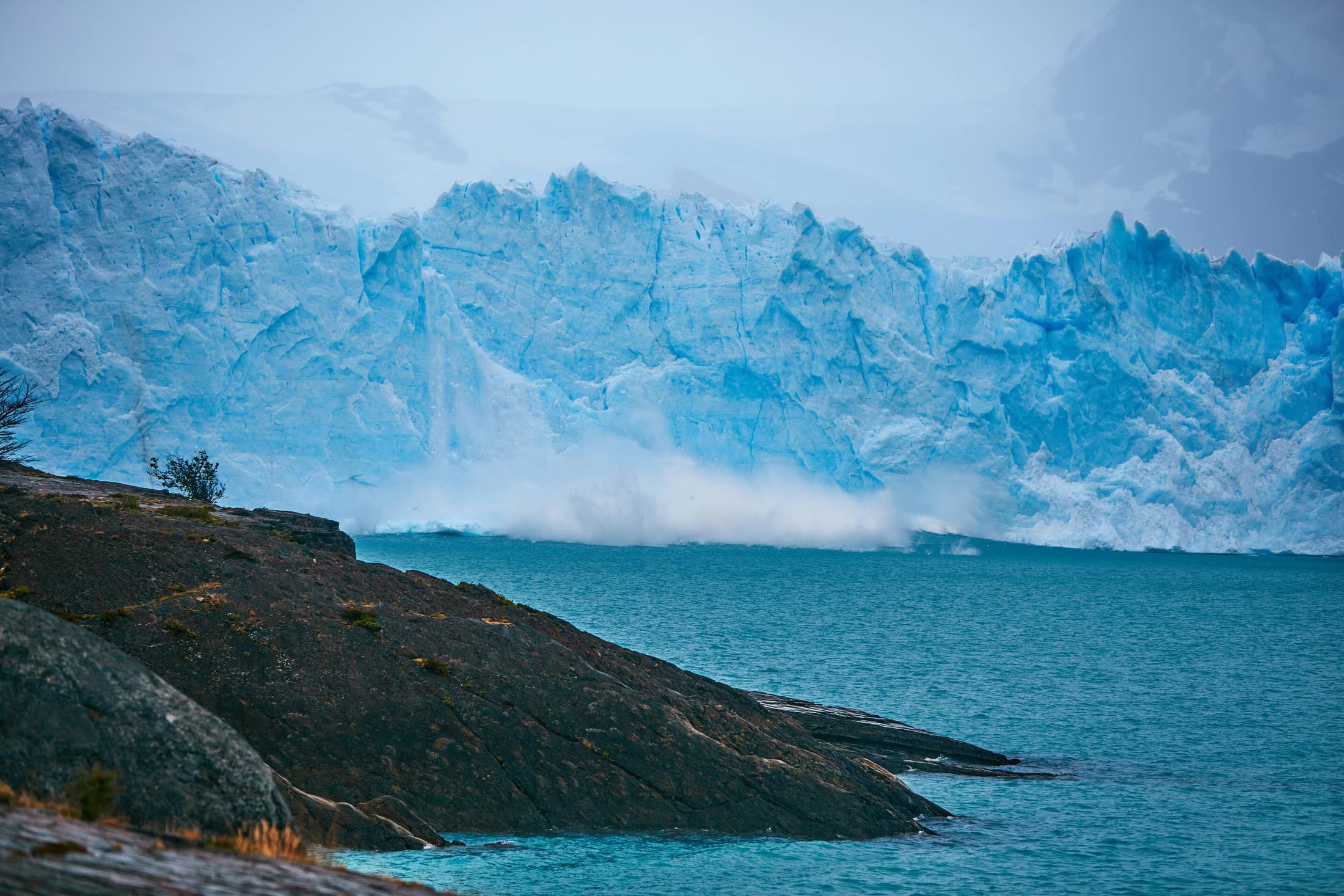
Patagonia & Fjords
Access and permits
The constraints that actually decide whether a date is possible.
- Park entry must be purchased in advance through Chile's official portal, and rangers check it at the entrance gates.
- Any night inside the mountain sector requires a confirmed reservation at an authorised refugio or campsite; the park will not let you onto those trails without vouchers for every night. Wild camping is prohibited.
- The full O Circuit runs roughly 1 November to 31 March, counter-clockwise only, and its back side opens later in some seasons. The W front side has a longer window.
- Rangers close the Base Torres approach on extreme-wind days. We build spare days in rather than pretend that will not happen.
Included
- Private bilingual mountain guide and vehicle for the full programme
- Torres del Paine park entry, booked in advance as required
- Lodge accommodation inside and near the park, plus any refugio or camp nights
- Grey glacier and Serrano–Balmaceda boat legs
- All meals in the park, transfers from Punta Arenas or Puerto Natales airports
Not included
- International and domestic Chilean flights
- Travel insurance including weather-disruption cover, which this region genuinely needs
- Technical shell layers and boots (rental available in Natales)
- Ice-trekking on Grey unless specifically added
- Personal insurance, including medical and evacuation cover
What the price reflects
This band reflects genuine lodge-standard Patagonia. Peak all-inclusive rates at the top explorer lodges around the park run well past $1,500 per person per night, so a twelve-day programme at that standard sits at the upper end. The lower end assumes strong but simpler hotels in Natales with private guiding throughout. We will tell you exactly which lodges a given number buys. What moves a quote inside that picture is party size, season, and the lodge or camp class actually available for your dates. Private guiding throughout, lodge-based. Small-group departures of up to ten run in December and February. We tell you plainly which nights are lodge and which are mountain refuge before you commit. On the included side, the band already assumes items such as: Private bilingual mountain guide and vehicle for the full programme; Torres del Paine park entry, booked in advance as required; Lodge accommodation inside and near the park, plus any refugio or camp nights. Still outside the band unless we write them in: International and domestic Chilean flights; Travel insurance including weather-disruption cover, which this region genuinely needs; Technical shell layers and boots (rental available in Natales). Nothing is confirmed until it is confirmed in writing.
- Party size
- Per-person cost usually falls as the private team is shared across more guests, up to the format limit implied by the guiding and lodge picture. Private guiding throughout, lodge-based.
- Season and dates
- Window on the card: Oct–Apr. Planning note: October to April. December and January are warmest and busiest; March combines settled weather with lighter wind and thinner trails. We do not run this June to August. Peak dates inside that window tighten lodge and permit availability, which is what usually pushes a quote toward the top of a published band.
- Lodge or camp class
- Accommodation in the band reflects: Lodge accommodation inside and near the park, plus any refugio or camp nights. Moving up or down a class, or shifting to a scarcer property, changes the quote without changing the route.
- Internal transport
- Transfers and regional legs follow the trip design. Watch for: International and domestic Chilean flights. Charter or peak-season domestic seats, where they apply, sit outside a simple road transfer.
- Permits and access
- Access cost tracks what the ground already requires. Torres del Paine park entry, booked in advance as required We do not invent fee figures beyond what the catalogue already states.
- Outside the band
- Not assumed unless written in: International and domestic Chilean flights; Travel insurance including weather-disruption cover, which this region genuinely needs; Technical shell layers and boots (rental available in Natales).
Bands are per person sharing and move with party size, season, and lodge choice. Nothing is confirmed until it is confirmed in writing. How we price.
Where this is
Torres del Paine National Park and Última Esperanza province, Magallanes, Chile.
Elevation: Sea level to 1,200 m; no altitude concern. Season as published: Oct–Apr. Difficulty as assessed: Challenging.
What we checked
Seasons, altitudes, permits, and caps on this page were checked against park authorities, monitoring agencies, and operators on the ground. Where a fact changes with the year, we say so rather than round it off.
Near this
Same terrain, different week
Chile
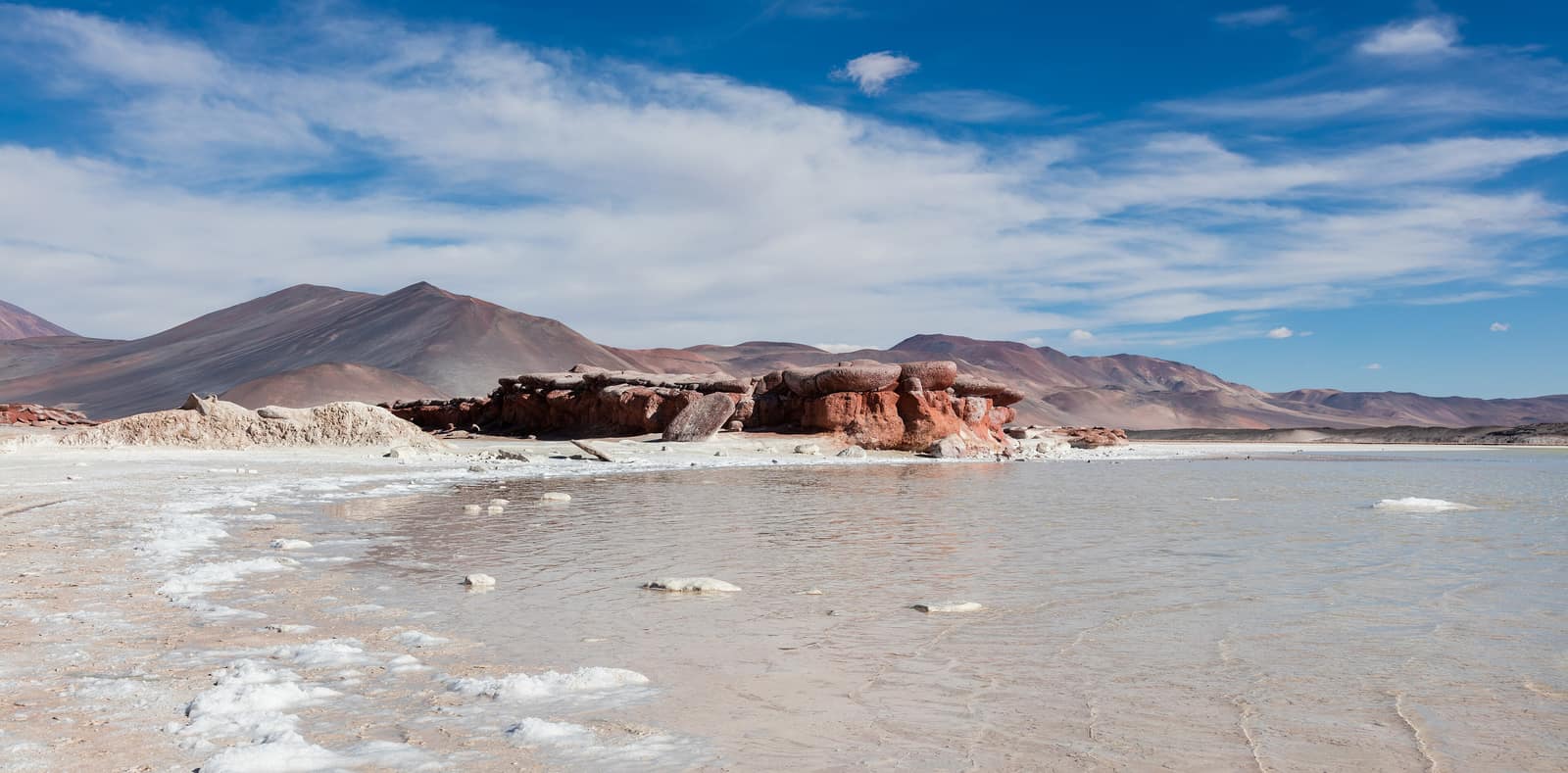
Atacama Sky & Salt
San Pedro de Atacama & Altiplano
Salt flats crack underfoot while volcanoes hold the horizon. After dark, the driest sky on Earth opens into a field of unbroken stars.
- Duration
- 9 days
- Effort
- Moderate
- Window
- Year-round
$6,800–$9,800
Detail →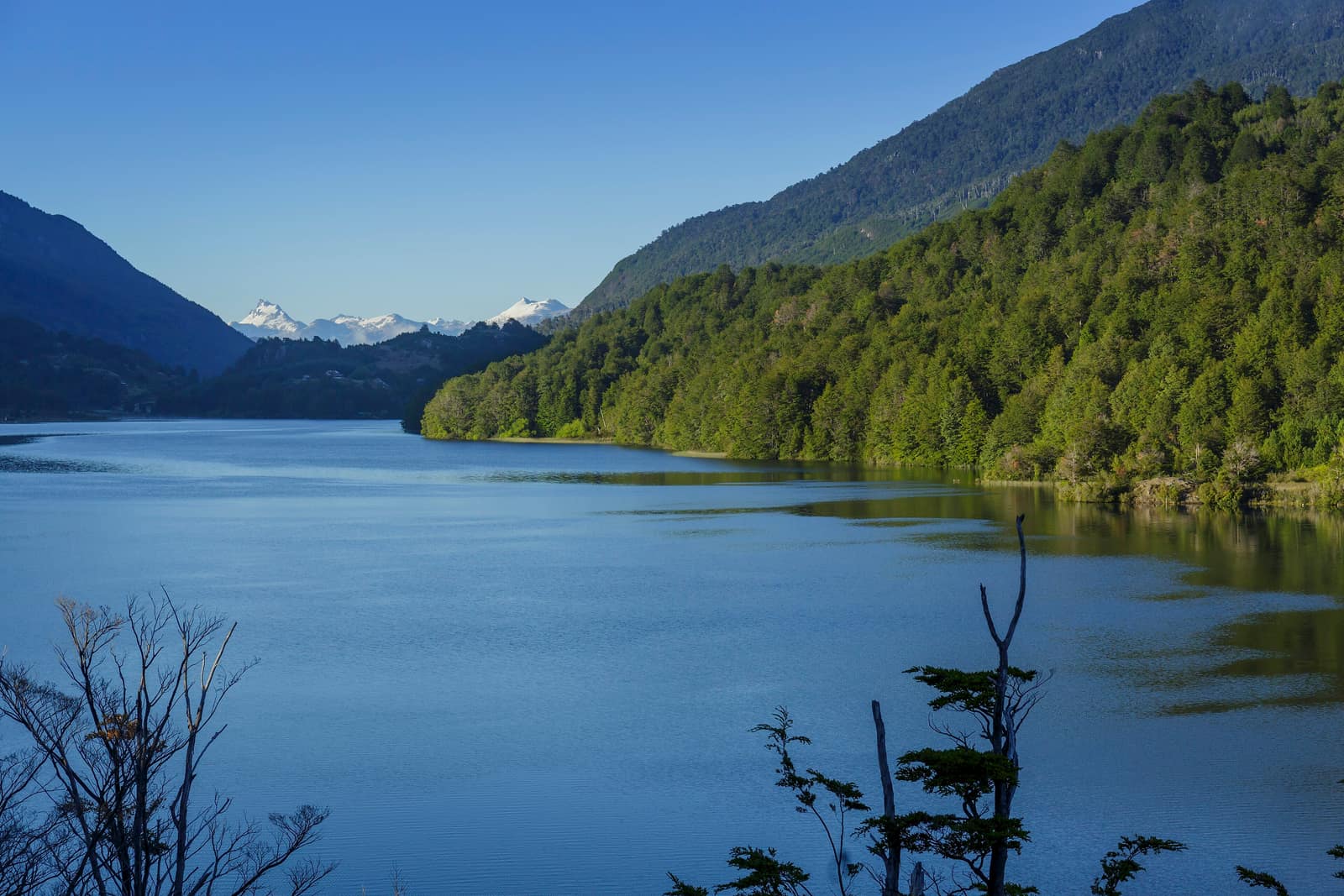
Chile
Carretera Austral Crossing
Región de Aysén, Carretera Austral
Ferry and gravel road through fjords, hanging glaciers, and empty valleys. Marble caves glow turquoise; hot springs steam beside cold rivers.
- Duration
- 12 days
- Effort
- Moderate
- Window
- Nov–Mar
$8,800–$12,800
Detail →
Chile
Chiloé Island Coast
Chiloé Archipelago
Wooden churches face Pacific swell; penguins nest on rocky islets. Mist and peat smell of the south; stilt villages rise with the tide.
- Duration
- 7 days
- Effort
- Easy
- Window
- Oct–Apr
$5,200–$7,900
Detail →From the ground
Frames from this route family and country — not a studio set, and not a promise of identical weather.