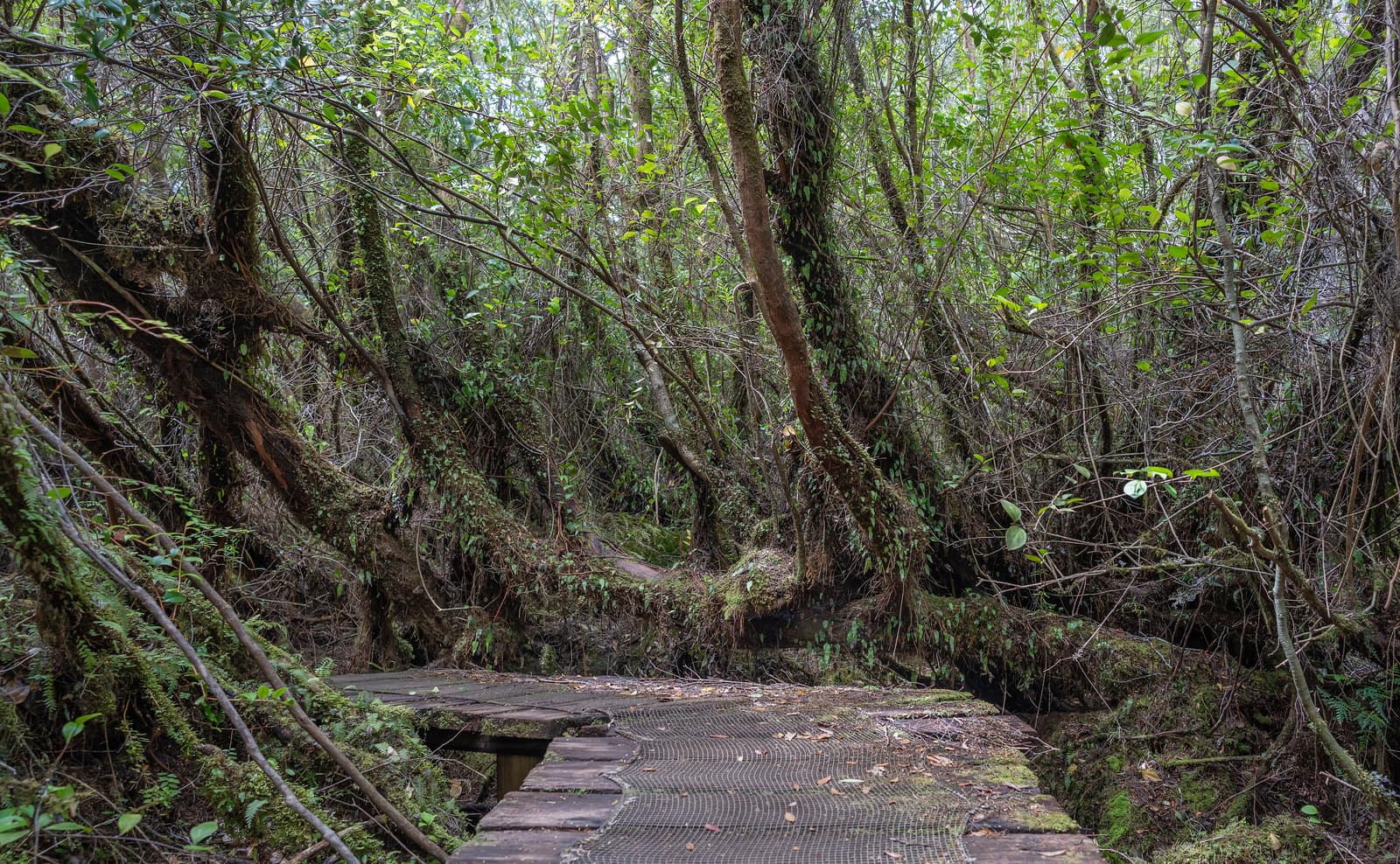
Chiloé Island Coast
Chiloé Archipelago
Wooden churches face Pacific swell; penguins nest on rocky islets. Mist and peat smell of the south; stilt villages rise with the tide.
- Days
- 7
- Effort
- Easy
- Window
- Oct–Apr
- From
- $5,200
The ground
Chiloé is a separate world from mainland Chile and knows it. Sixteen of its wooden churches are UNESCO-listed, built by Jesuit and Franciscan missionaries with Chilote shipwright technique, entirely in wood, with shingled facades and no nails in the oldest joints. Castro's palafitos, stilt houses over the tidal channel, are the other signature.
At Puñihuil there is a genuine oddity: Humboldt and Magellanic penguins nest side by side on the same islets. It is the only place in the world where the two species breed together, and you see it from a small boat launched off the beach through surf.
Weather is the constant. This is a wet, misty, wind-worked coast where the tides run large, the food is potato, seafood, and curanto cooked in a pit, and the mythology, the Trauco, the Caleuche, is still in active use rather than folklore.
Chiloé Archipelago, Los Lagos, Chile. Sixteen churches are UNESCO World Heritage. Working elevation runs Sea level to about 400 m. That profile shapes sleep, pace, and how early the group needs to move. The published window: October through April. December to February is driest and the penguins are on the nests roughly September to March. Within that window, day order still flexes with weather and access.
The penguin colonies at Puñihuil are a protected area with regulated boat operators and a nesting season roughly September to March. Several of the UNESCO churches keep limited opening hours or open only for services; we arrange access rather than turn up hopefully. Private guide and vehicle, staying in Castro and coastal lodges. Small-group departures up to eight. This is the operating shape of the trip: private enough to reorder days, constrained enough that permits and local rules still set the ceiling.
Shape of the days
A shape, not a script. Order and pacing move with weather, permits, and how the first days actually go.
Day 1
Crossing and Ancud: opening
Day 1 sits inside the 1–2 arc titled Crossing and Ancud. Ferry across the Chacao channel, Ancud, and the first of the churches at Chacao and Quemchi. This opening slice sets the logistics and the first read of the ground before the denser days. Field days stay inside the ground already described for Chile. Chiloé is a separate world from mainland Chile and knows it. The penguin colonies at Puñihuil are a protected area with regulated boat operators and a nesting season roughly September to March. Private guide and vehicle, staying in Castro and coastal lodges. Expect a full field day measured in hours on foot, on the water, or in transit between sectors already named above. Private guiding means we can shorten or reorder, not that the underlying constraints disappear. At Puñihuil there is a genuine oddity: Humboldt and Magellanic penguins nest side by side on the same islets. It is the only place in the world where the two species breed together, and you see it from a small boat launched off the beach through surf. Geography stays inside Chiloé Archipelago, Los Lagos, Chile. Sixteen churches are UNESCO World Heritage. Season logic we plan against: October through April. December to February is driest and the penguins are on the nests roughly September to March. For kit on these days: Rain gear you would trust in a Scottish winter, because it rains here on more days than not.
Day 2
Crossing and Ancud: continuation
Day 2 sits inside the 1–2 arc titled Crossing and Ancud. Ferry across the Chacao channel, Ancud, and the first of the churches at Chacao and Quemchi. This closing slice of the block consolidates what the earlier days opened, without inventing a new sector. Field days stay inside the ground already described for Chile. At Puñihuil there is a genuine oddity: Humboldt and Magellanic penguins nest side by side on the same islets. Several of the UNESCO churches keep limited opening hours or open only for services; we arrange access rather than turn up hopefully. Private guide and vehicle, staying in Castro and coastal lodges. Expect a full field day measured in hours on foot, on the water, or in transit between sectors already named above. Private guiding means we can shorten or reorder, not that the underlying constraints disappear. It is the only place in the world where the two species breed together, and you see it from a small boat launched off the beach through surf. Geography stays inside Chiloé Archipelago, Los Lagos, Chile. Sixteen churches are UNESCO World Heritage. Season logic we plan against: October through April. December to February is driest and the penguins are on the nests roughly September to March. For kit on these days: Rain gear you would trust in a Scottish winter, because it rains here on more days than not.
Day 3
Castro and the churches: opening
Day 3 sits inside the 3–4 arc titled Castro and the churches. Palafitos, the Castro church, and the eastern-shore circuit, Dalcahue, Quinchao, Achao, where the oldest surviving church is. This opening slice sets the logistics and the first read of the ground before the denser days. Field days stay inside the ground already described for Chile. Weather is the constant. The penguin colonies at Puñihuil are a protected area with regulated boat operators and a nesting season roughly September to March. Private guide and vehicle, staying in Castro and coastal lodges. Expect a full field day measured in hours on foot, on the water, or in transit between sectors already named above. Private guiding means we can shorten or reorder, not that the underlying constraints disappear. Chiloé is a separate world from mainland Chile and knows it. Sixteen of its wooden churches are UNESCO-listed, built by Jesuit and Franciscan missionaries with Chilote shipwright technique, entirely in wood, with shingled facades and no nails in the oldest joints. Castro's palafitos, stilt houses over the tidal channel, are the other signature. Geography stays inside Chiloé Archipelago, Los Lagos, Chile. Sixteen churches are UNESCO World Heritage. Season logic we plan against: October through April. December to February is driest and the penguins are on the nests roughly September to March. For kit on these days: Rain gear you would trust in a Scottish winter, because it rains here on more days than not.
Day 4
Castro and the churches: continuation
Day 4 sits inside the 3–4 arc titled Castro and the churches. Palafitos, the Castro church, and the eastern-shore circuit, Dalcahue, Quinchao, Achao, where the oldest surviving church is. This closing slice of the block consolidates what the earlier days opened, without inventing a new sector. Field days stay inside the ground already described for Chile. Chiloé is a separate world from mainland Chile and knows it. Several of the UNESCO churches keep limited opening hours or open only for services; we arrange access rather than turn up hopefully. Private guide and vehicle, staying in Castro and coastal lodges. Expect a full field day measured in hours on foot, on the water, or in transit between sectors already named above. Private guiding means we can shorten or reorder, not that the underlying constraints disappear. Sixteen of its wooden churches are UNESCO-listed, built by Jesuit and Franciscan missionaries with Chilote shipwright technique, entirely in wood, with shingled facades and no nails in the oldest joints. Castro's palafitos, stilt houses over the tidal channel, are the other signature. Geography stays inside Chiloé Archipelago, Los Lagos, Chile. Sixteen churches are UNESCO World Heritage. Season logic we plan against: October through April. December to February is driest and the penguins are on the nests roughly September to March. For kit on these days: Rain gear you would trust in a Scottish winter, because it rains here on more days than not.
Day 5
Puñihuil
Day 5 sits inside the 5 arc titled Puñihuil. Boat to the penguin islets, plus the Pacific coast dunes and the Chiloé National Park trails. The day order inside this block can shift when weather or access forces a rewrite. Field days stay inside the ground already described for Chile. At Puñihuil there is a genuine oddity: Humboldt and Magellanic penguins nest side by side on the same islets. The penguin colonies at Puñihuil are a protected area with regulated boat operators and a nesting season roughly September to March. Private guide and vehicle, staying in Castro and coastal lodges. Expect a full field day measured in hours on foot, on the water, or in transit between sectors already named above. Private guiding means we can shorten or reorder, not that the underlying constraints disappear. Weather is the constant. This is a wet, misty, wind-worked coast where the tides run large, the food is potato, seafood, and curanto cooked in a pit, and the mythology, the Trauco, the Caleuche, is still in active use rather than folklore. Geography stays inside Chiloé Archipelago, Los Lagos, Chile. Sixteen churches are UNESCO World Heritage. Season logic we plan against: October through April. December to February is driest and the penguins are on the nests roughly September to March. For kit on these days: Rain gear you would trust in a Scottish winter, because it rains here on more days than not.
Days 6–7
South and exit
Days 6–7 continue the South and exit block. Cucao and the park's Pacific side, then back north for the ferry and Puerto Montt. The day order inside this block can shift when weather or access forces a rewrite. Exit logistics follow the same transfer pattern already built into the programme. The penguin colonies at Puñihuil are a protected area with regulated boat operators and a nesting season roughly September to March. International connections should leave buffer after the last field day; late-evening flights only when the ground day is genuinely short. The last day is deliberately lighter where the catalogue allows it, so extraction does not collide with a hard physical ask. Chiloé is a separate world from mainland Chile and knows it. Sixteen of its wooden churches are UNESCO-listed, built by Jesuit and Franciscan missionaries with Chilote shipwright technique, entirely in wood, with shingled facades and no nails in the oldest joints. Castro's palafitos, stilt houses over the tidal channel, are the other signature. Geography stays inside Chiloé Archipelago, Los Lagos, Chile. Sixteen churches are UNESCO World Heritage. Season logic we plan against: October through April. December to February is driest and the penguins are on the nests roughly September to March. Packing still matters here: Rain gear you would trust in a Scottish winter, because it rains here on more days than not.
Conditions
Cool and wet year-round: summer highs of 15–19 °C and rain on more days than not. October to April is the practical window. Boat trips to the penguin islets are surf- and weather-dependent and do get cancelled.
Fitness bar
Easy. Short coastal and forest walks, church visits, boat trips. Nothing demanding beyond getting in and out of a small boat through surf.
Best months
October through April. December to February is driest and the penguins are on the nests roughly September to March.
Private or small group
Private guide and vehicle, staying in Castro and coastal lodges. Small-group departures up to eight.
What to bring
Rain gear you would trust in a Scottish winter, because it rains here on more days than not. Warm layers for 15–19 °C summer, and shoes you can get wet launching through surf at Puñihuil.
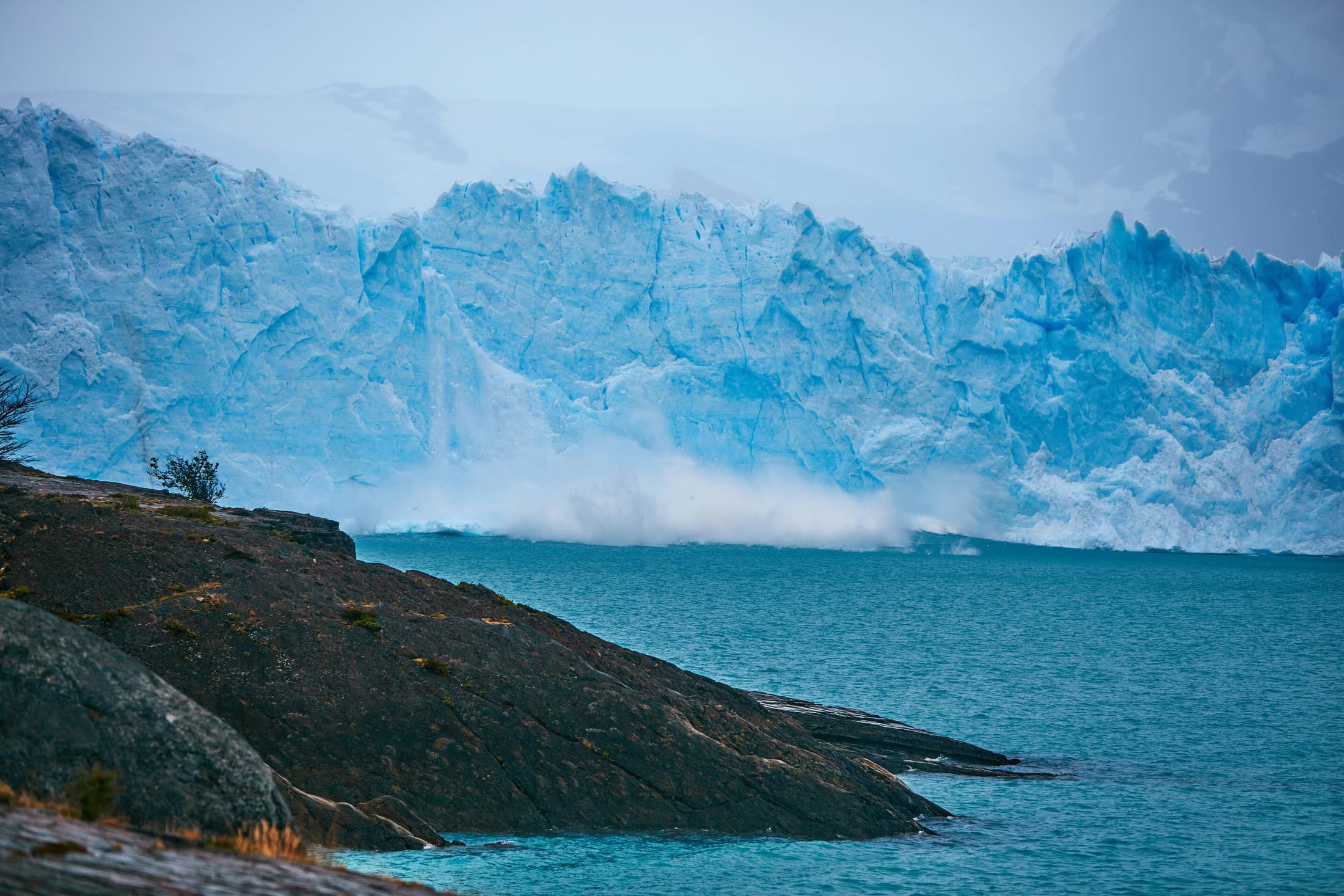
Patagonia & Fjords
Access and permits
The constraints that actually decide whether a date is possible.
- The penguin colonies at Puñihuil are a protected area with regulated boat operators and a nesting season roughly September to March.
- Several of the UNESCO churches keep limited opening hours or open only for services; we arrange access rather than turn up hopefully.
Included
- Vehicle ferry across the Chacao channel and inter-island crossings
- Private guide, church access, and Chiloé National Park entry
- Puñihuil penguin boat when conditions allow
- Lodging in Castro and on the coast, curanto and local kitchens
- Daily field briefings with the lead guide before departure
Not included
- Flights to Puerto Montt
- Penguin boat trips cancelled by surf, refunded or substituted
- Guaranteed dry weather, which nobody can offer here
- Personal insurance, including medical and evacuation cover
- Tips for guides and lodge staff, which remain optional and separate
What the price reflects
$5,200–7,900 for seven days covers private guiding and vehicle, all ferries, church access arranged in advance, and the better Castro lodging. Chiloé is straightforward and inexpensive to self-drive. What moves a quote inside that picture is party size, season, and the lodge or camp class actually available for your dates. Private guide and vehicle, staying in Castro and coastal lodges. Small-group departures up to eight. On the included side, the band already assumes items such as: Vehicle ferry across the Chacao channel and inter-island crossings; Private guide, church access, and Chiloé National Park entry; Puñihuil penguin boat when conditions allow. Still outside the band unless we write them in: Flights to Puerto Montt; Penguin boat trips cancelled by surf, refunded or substituted; Guaranteed dry weather, which nobody can offer here. Nothing is confirmed until it is confirmed in writing.
- Party size
- Per-person cost usually falls as the private team is shared across more guests, up to the format limit implied by the guiding and lodge picture. Private guide and vehicle, staying in Castro and coastal lodges.
- Season and dates
- Window on the card: Oct–Apr. Planning note: October through April. December to February is driest and the penguins are on the nests roughly September to March. Peak dates inside that window tighten lodge and permit availability, which is what usually pushes a quote toward the top of a published band.
- Lodge or camp class
- Where you sleep (lodge, tented camp, or station) is one of the largest levers once guiding is fixed. We price the class we can actually hold for your dates.
- Internal transport
- Transfers and regional legs follow the trip design. Watch for: Flights to Puerto Montt. Charter or peak-season domestic seats, where they apply, sit outside a simple road transfer.
- Permits and access
- Access cost tracks what the ground already requires. Private guide, church access, and Chiloé National Park entry We do not invent fee figures beyond what the catalogue already states.
- Outside the band
- Not assumed unless written in: Flights to Puerto Montt; Penguin boat trips cancelled by surf, refunded or substituted; Guaranteed dry weather, which nobody can offer here.
Bands are per person sharing and move with party size, season, and lodge choice. Nothing is confirmed until it is confirmed in writing. How we price.
Where this is
Chiloé Archipelago, Los Lagos, Chile. Sixteen churches are UNESCO World Heritage.
Elevation: Sea level to about 400 m. Season as published: Oct–Apr. Difficulty as assessed: Easy.
What we checked
Seasons, altitudes, permits, and caps on this page were checked against park authorities, monitoring agencies, and operators on the ground. Where a fact changes with the year, we say so rather than round it off.
Near this
Same terrain, different week
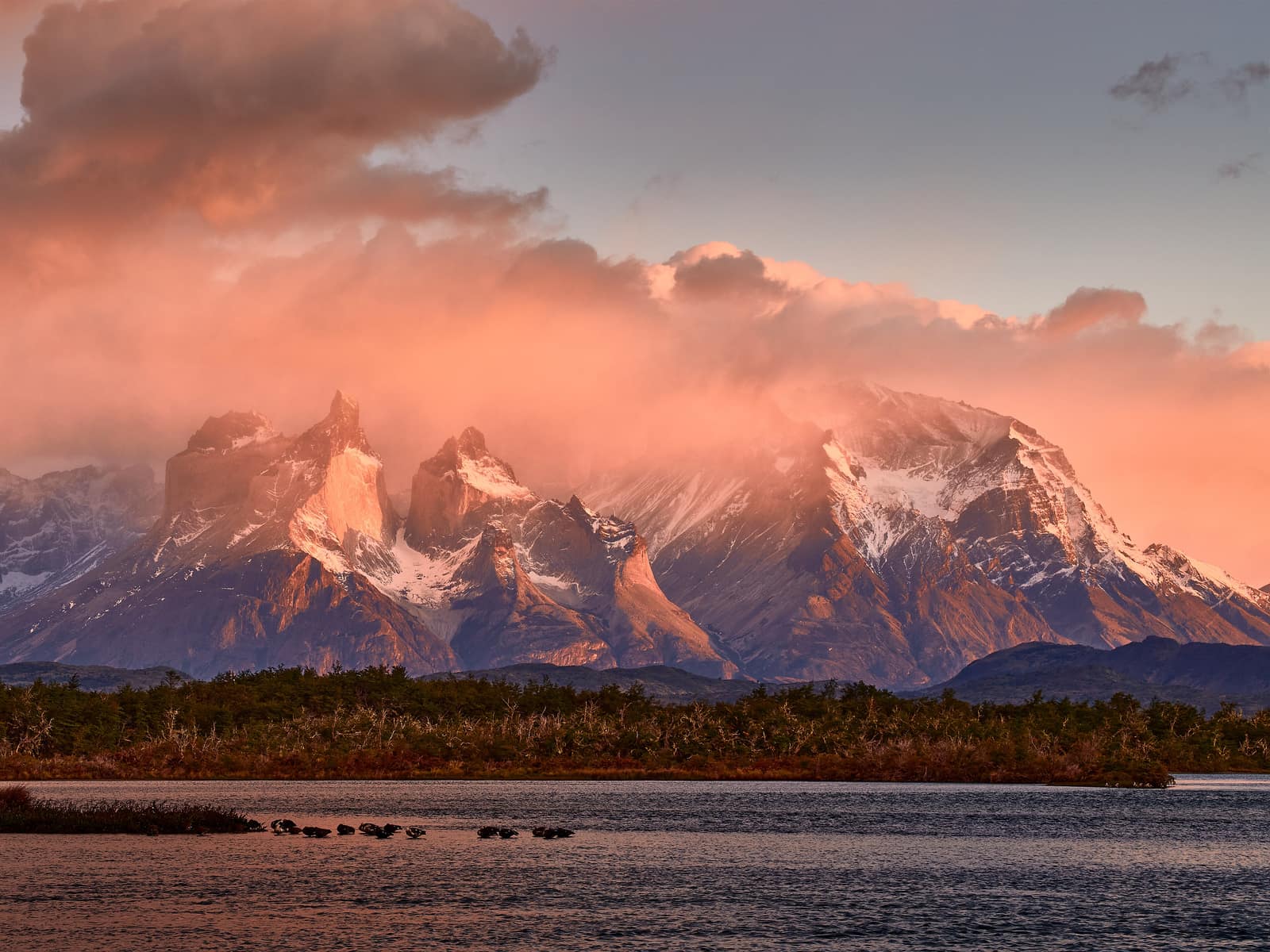
Chile
Patagonia Edge Circuit
Torres del Paine & Última Esperanza
Wind scours granite towers while glacial lakes flash turquoise under fast cloud. Each day closes with firelight and the sound of ice calving far off.
- Duration
- 12 days
- Effort
- Challenging
- Window
- Oct–Apr
$9,500–$18,000
Detail →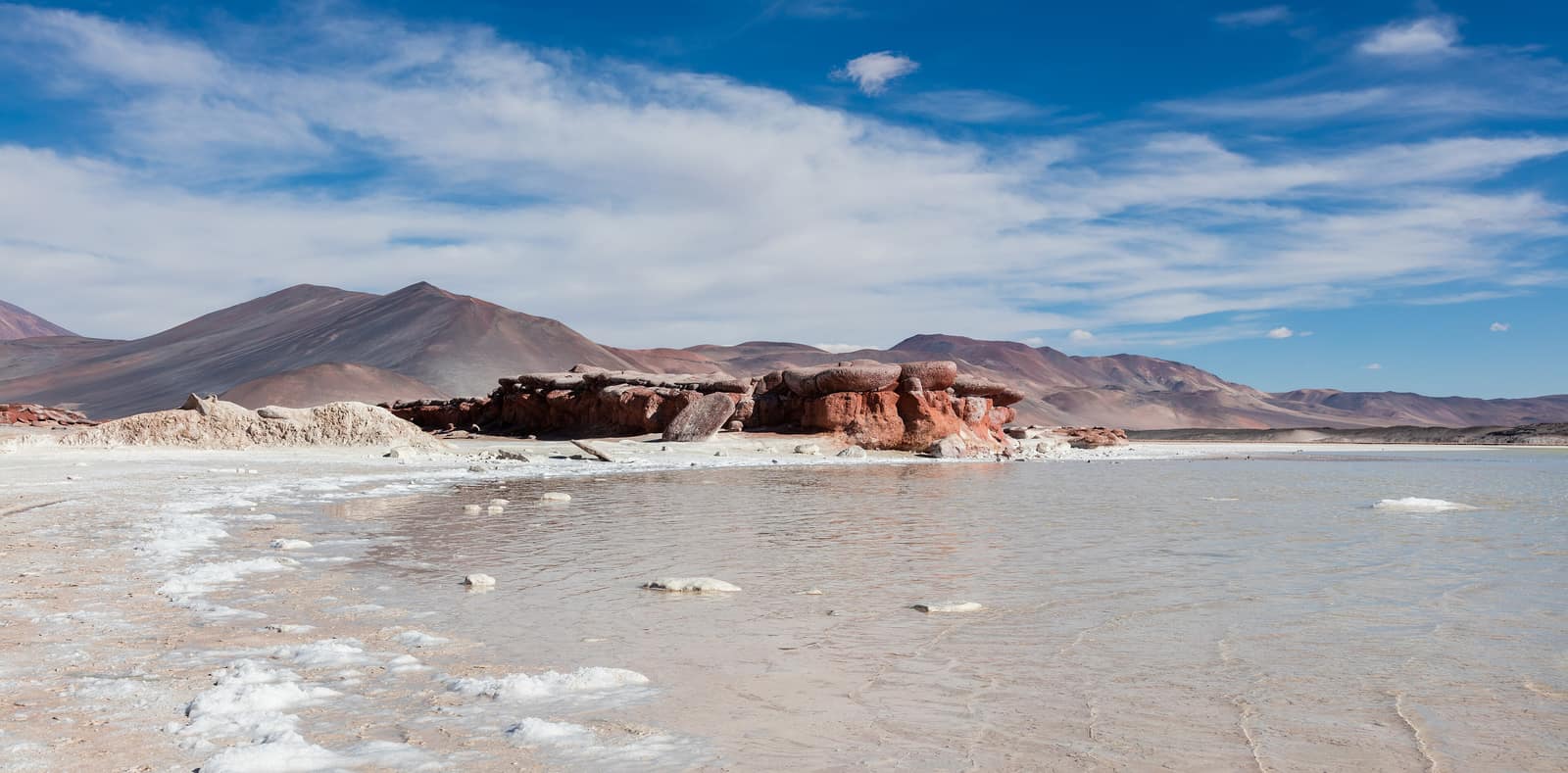
Chile
Atacama Sky & Salt
San Pedro de Atacama & Altiplano
Salt flats crack underfoot while volcanoes hold the horizon. After dark, the driest sky on Earth opens into a field of unbroken stars.
- Duration
- 9 days
- Effort
- Moderate
- Window
- Year-round
$6,800–$9,800
Detail →
Chile
Carretera Austral Crossing
Región de Aysén, Carretera Austral
Ferry and gravel road through fjords, hanging glaciers, and empty valleys. Marble caves glow turquoise; hot springs steam beside cold rivers.
- Duration
- 12 days
- Effort
- Moderate
- Window
- Nov–Mar
$8,800–$12,800
Detail →From the ground
Frames from this route family and country — not a studio set, and not a promise of identical weather.