Amazon Manaus River
Manaus & Negro–Solimões
Meeting of the waters draws a line across the river. Lodge nights bring pink dolphins and the deep bass of frogs after rain.
- Days
- 8
- Effort
- Easy
- Window
- Year-round
- From
- $6,500
The ground
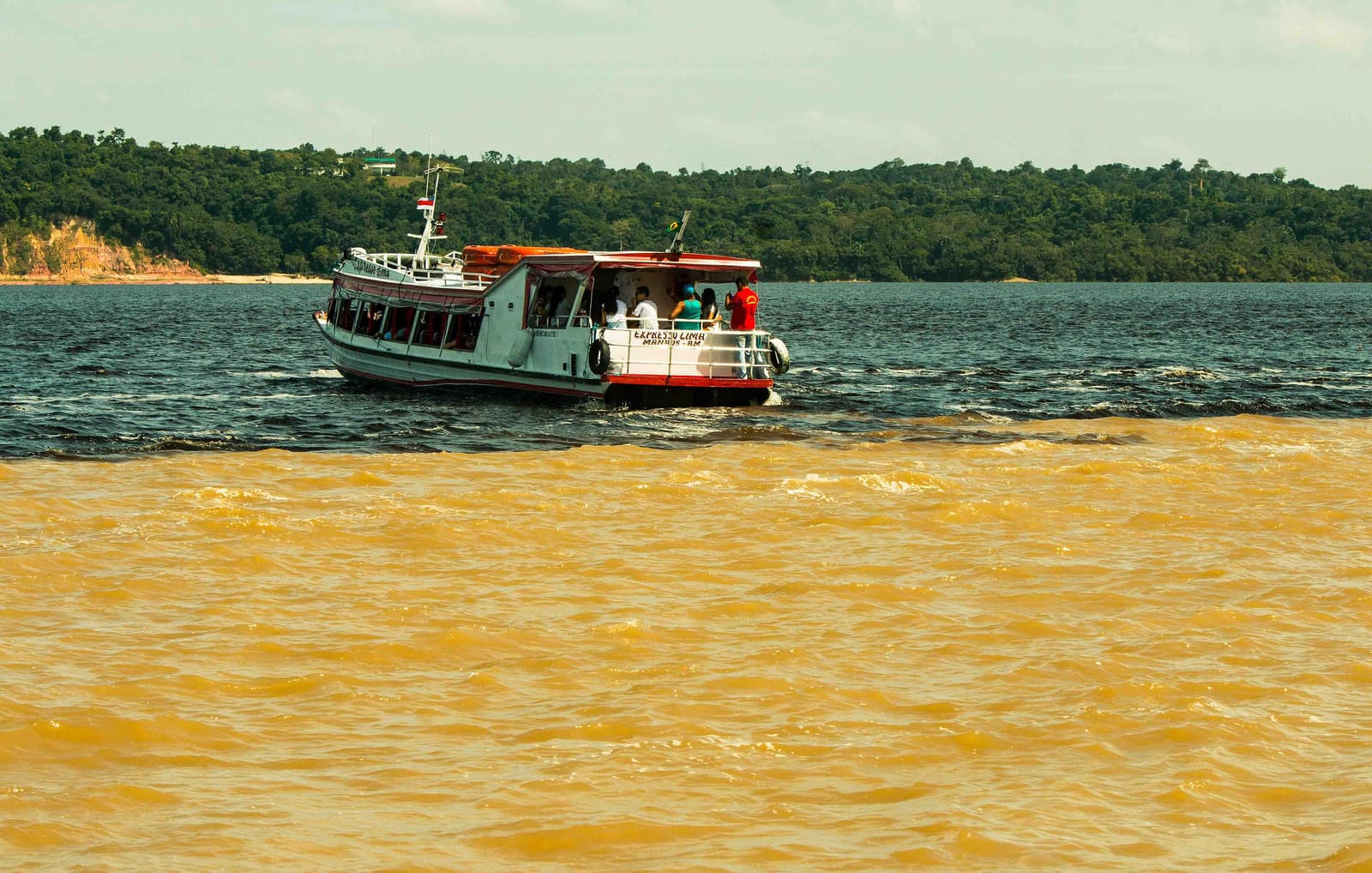
The Encontro das Águas below Manaus is the visible one: the black, acidic Rio Negro and the pale, sediment-heavy Solimões running side by side for several kilometres without mixing, because their temperature, density, and flow speed differ. You can put a hand in each.
The Negro's blackwater is the practical reason to base there. It is acidic and low in nutrients, which means dramatically fewer mosquitoes than the whitewater rivers. The Anavilhanas archipelago upstream is one of the largest river-island systems in the world and floods and drains by about 10 metres a year.
That 10 metres is the trip. At high water, roughly May to July, you paddle a canoe through the crowns of flooded igapó forest. At low water, September to November, beaches appear, trails open, and you walk ground that was 8 m under. Different trips, same river.
Manaus, the Rio Negro, Anavilhanas, and the Solimões confluence, Amazonas, Brazil. Working elevation runs Lowland, about 30–100 m. That profile shapes sleep, pace, and how early the group needs to move. The published window: Year-round, choose by water level. May to July for flooded-forest canoeing; September to November for beaches, trails, and better walking. Within that window, day order still flexes with weather and access.
Several operations around Manaus offer swim-with-dolphins using food provisioning. It changes the animals' behaviour and we will not book it; wild observation from a boat is what we do. River level determines which channels and trails exist in a given month. We plan the itinerary around the stage, not the brochure. Private guide and private boat, lodge-based. Small-group departures up to ten. This is the operating shape of the trip: private enough to reorder days, constrained enough that permits and local rules still set the ceiling.
Shape of the days
A shape, not a script. Order and pacing move with weather, permits, and how the first days actually go.
Day 1
Manaus: opening
Day 1 sits inside the 1–2 arc titled Manaus. Arrival, the Teatro Amazonas and the Adolpho Lisboa market, then the Meeting of the Waters by boat. This opening slice sets the logistics and the first read of the ground before the denser days. Arrival and orientation use the published access picture. Several operations around Manaus offer swim-with-dolphins using food provisioning. It changes the animals' behaviour and we will not book it; wild observation from a boat is what we do. Elevation context for the programme: Lowland, about 30–100 m. Sleep and walk length are graded against that, not against a generic fitness brochure. Early days protect the later ones. We do not burn the group on a full-length day before the body has met the altitude, heat, or boat rhythm this route actually uses. The Negro's blackwater is the practical reason to base there. It is acidic and low in nutrients, which means dramatically fewer mosquitoes than the whitewater rivers. The Anavilhanas archipelago upstream is one of the largest river-island systems in the world and floods and drains by about 10 metres a year. Geography stays inside Manaus, the Rio Negro, Anavilhanas, and the Solimões confluence, Amazonas, Brazil. Season logic we plan against: Year-round, choose by water level. May to July for flooded-forest canoeing; September to November for beaches, trails, and better walking. Packing still matters here: Quick-dry layers, a light rain shell, and repellent, though the blackwater Negro is markedly kinder on insects than a whitewater river.
Day 2
Manaus: continuation
Day 2 sits inside the 1–2 arc titled Manaus. Arrival, the Teatro Amazonas and the Adolpho Lisboa market, then the Meeting of the Waters by boat. This closing slice of the block consolidates what the earlier days opened, without inventing a new sector. Arrival and orientation use the published access picture. River level determines which channels and trails exist in a given month. We plan the itinerary around the stage, not the brochure. Elevation context for the programme: Lowland, about 30–100 m. Sleep and walk length are graded against that, not against a generic fitness brochure. Early days protect the later ones. We do not burn the group on a full-length day before the body has met the altitude, heat, or boat rhythm this route actually uses. It is acidic and low in nutrients, which means dramatically fewer mosquitoes than the whitewater rivers. The Anavilhanas archipelago upstream is one of the largest river-island systems in the world and floods and drains by about 10 metres a year. Geography stays inside Manaus, the Rio Negro, Anavilhanas, and the Solimões confluence, Amazonas, Brazil. Season logic we plan against: Year-round, choose by water level. May to July for flooded-forest canoeing; September to November for beaches, trails, and better walking. Packing still matters here: Quick-dry layers, a light rain shell, and repellent, though the blackwater Negro is markedly kinder on insects than a whitewater river.
Days 3–4
Rio Negro and Anavilhanas: opening
Days 3–4 continue the Rio Negro and Anavilhanas block. Lodge on the Negro or a tributary, canoe channels, night spotlighting for caiman, canopy platforms, and dawn birding among the islands. This opening slice sets the logistics and the first read of the ground before the denser days. Field days stay inside the ground already described for Brazil. That 10 metres is the trip. Several operations around Manaus offer swim-with-dolphins using food provisioning. It changes the animals' behaviour and we will not book it; wild observation from a boat is what we do. Private guide and private boat, lodge-based. Expect a full field day measured in hours on foot, on the water, or in transit between sectors already named above. Private guiding means we can shorten or reorder, not that the underlying constraints disappear. The Encontro das Águas below Manaus is the visible one: the black, acidic Rio Negro and the pale, sediment-heavy Solimões running side by side for several kilometres without mixing, because their temperature, density, and flow speed differ. You can put a hand in each. Geography stays inside Manaus, the Rio Negro, Anavilhanas, and the Solimões confluence, Amazonas, Brazil. Season logic we plan against: Year-round, choose by water level. May to July for flooded-forest canoeing; September to November for beaches, trails, and better walking. For kit on these days: Quick-dry layers, a light rain shell, and repellent, though the blackwater Negro is markedly kinder on insects than a whitewater river.
Days 5–6
Rio Negro and Anavilhanas: continuation
Days 5–6 continue the Rio Negro and Anavilhanas block. Lodge on the Negro or a tributary, canoe channels, night spotlighting for caiman, canopy platforms, and dawn birding among the islands. This closing slice of the block consolidates what the earlier days opened, without inventing a new sector. Field days stay inside the ground already described for Brazil. The Encontro das Águas below Manaus is the visible one: the black, acidic Rio Negro and the pale, sediment-heavy Solimões running side by side for several kilometres without mixing, because their temperature, density, and flow speed differ. River level determines which channels and trails exist in a given month. We plan the itinerary around the stage, not the brochure. Private guide and private boat, lodge-based. Expect a full field day measured in hours on foot, on the water, or in transit between sectors already named above. Private guiding means we can shorten or reorder, not that the underlying constraints disappear. You can put a hand in each. Geography stays inside Manaus, the Rio Negro, Anavilhanas, and the Solimões confluence, Amazonas, Brazil. Season logic we plan against: Year-round, choose by water level. May to July for flooded-forest canoeing; September to November for beaches, trails, and better walking. For kit on these days: Quick-dry layers, a light rain shell, and repellent, though the blackwater Negro is markedly kinder on insects than a whitewater river.
Day 7
River communities and dolphins
Day 7 sits inside the 7 arc titled River communities and dolphins. A caboclo community morning on their terms, and wild observation of botos, the Amazon river dolphin, from a boat rather than a feeding platform. The day order inside this block can shift when weather or access forces a rewrite. Field days stay inside the ground already described for Brazil. The Negro's blackwater is the practical reason to base there. Several operations around Manaus offer swim-with-dolphins using food provisioning. It changes the animals' behaviour and we will not book it; wild observation from a boat is what we do. Private guide and private boat, lodge-based. Expect a full field day measured in hours on foot, on the water, or in transit between sectors already named above. Private guiding means we can shorten or reorder, not that the underlying constraints disappear. That 10 metres is the trip. At high water, roughly May to July, you paddle a canoe through the crowns of flooded igapó forest. At low water, September to November, beaches appear, trails open, and you walk ground that was 8 m under. Different trips, same river. Geography stays inside Manaus, the Rio Negro, Anavilhanas, and the Solimões confluence, Amazonas, Brazil. Season logic we plan against: Year-round, choose by water level. May to July for flooded-forest canoeing; September to November for beaches, trails, and better walking. For kit on these days: Quick-dry layers, a light rain shell, and repellent, though the blackwater Negro is markedly kinder on insects than a whitewater river.
Day 8
Exit
Day 8 sits inside the 8 arc titled Exit. Downriver to Manaus and departure. The day order inside this block can shift when weather or access forces a rewrite. Exit logistics follow the same transfer pattern already built into the programme. Several operations around Manaus offer swim-with-dolphins using food provisioning. It changes the animals' behaviour and we will not book it; wild observation from a boat is what we do. International connections should leave buffer after the last field day; late-evening flights only when the ground day is genuinely short. The last day is deliberately lighter where the catalogue allows it, so extraction does not collide with a hard physical ask. The Encontro das Águas below Manaus is the visible one: the black, acidic Rio Negro and the pale, sediment-heavy Solimões running side by side for several kilometres without mixing, because their temperature, density, and flow speed differ. You can put a hand in each. Geography stays inside Manaus, the Rio Negro, Anavilhanas, and the Solimões confluence, Amazonas, Brazil. Season logic we plan against: Year-round, choose by water level. May to July for flooded-forest canoeing; September to November for beaches, trails, and better walking. Packing still matters here: Quick-dry layers, a light rain shell, and repellent, though the blackwater Negro is markedly kinder on insects than a whitewater river.
Conditions
Hot and humid year-round, 25–33 °C, with rain in any month and heaviest December to May. High water peaks around June, low water around October. The Negro's blackwater keeps mosquito pressure genuinely low compared to whitewater areas.
Fitness bar
Easy. Boat and canoe based, with short forest walks. Canopy platforms involve stairs or a harness.
Best months
Year-round, choose by water level. May to July for flooded-forest canoeing; September to November for beaches, trails, and better walking.
Private or small group
Private guide and private boat, lodge-based. Small-group departures up to ten.
What to bring
Quick-dry layers, a light rain shell, and repellent, though the blackwater Negro is markedly kinder on insects than a whitewater river. Water shoes for canoe landings and a dry bag for the boat days.
Amazon & Rainforest
Access and permits
The constraints that actually decide whether a date is possible.
- Several operations around Manaus offer swim-with-dolphins using food provisioning. It changes the animals' behaviour and we will not book it; wild observation from a boat is what we do.
- River level determines which channels and trails exist in a given month. We plan the itinerary around the stage, not the brochure.
Included
- Private boat and naturalist guide
- Lodge accommodation on the Negro and all meals
- Meeting of the Waters, canoe excursions, and night spotlighting
- Manaus hotel night and all transfers
- Daily field briefings with the lead guide before departure
Not included
- Provisioned dolphin-feeding attractions, which we do not use
- International flights
- Guaranteed dolphin or wildlife sightings
- Personal insurance, including medical and evacuation cover
- Tips for guides and lodge staff, which remain optional and separate
What the price reflects
$6,500–9,800 for eight days sits in the band of the better Anavilhanas and Juma-class lodges once a private boat and dedicated naturalist are included. Group lodge packages cost considerably less and run to a shared schedule. What moves a quote inside that picture is party size, season, and the lodge or camp class actually available for your dates. Private guide and private boat, lodge-based. Small-group departures up to ten. On the included side, the band already assumes items such as: Private boat and naturalist guide; Lodge accommodation on the Negro and all meals; Meeting of the Waters, canoe excursions, and night spotlighting. Still outside the band unless we write them in: Provisioned dolphin-feeding attractions, which we do not use; International flights; Guaranteed dolphin or wildlife sightings. Nothing is confirmed until it is confirmed in writing.
- Party size
- Per-person cost usually falls as the private team is shared across more guests, up to the format limit implied by the guiding and lodge picture. Private guide and private boat, lodge-based.
- Season and dates
- Window on the card: Year-round. Planning note: Year-round, choose by water level. May to July for flooded-forest canoeing; September to November for beaches, trails, and better walking. Peak dates inside that window tighten lodge and permit availability, which is what usually pushes a quote toward the top of a published band.
- Lodge or camp class
- Accommodation in the band reflects: Lodge accommodation on the Negro and all meals. Moving up or down a class, or shifting to a scarcer property, changes the quote without changing the route.
- Internal transport
- Transfers and regional legs follow the trip design. Watch for: International flights. Charter or peak-season domestic seats, where they apply, sit outside a simple road transfer.
- Guiding ratio
- Private guide and private boat, lodge-based. A dedicated lead, specialist, or community guide changes the quote relative to a shared departure even when the route looks identical on a map.
- Outside the band
- Not assumed unless written in: Provisioned dolphin-feeding attractions, which we do not use; International flights; Guaranteed dolphin or wildlife sightings.
Bands are per person sharing and move with party size, season, and lodge choice. Nothing is confirmed until it is confirmed in writing. How we price.
Where this is
Manaus, the Rio Negro, Anavilhanas, and the Solimões confluence, Amazonas, Brazil.
Elevation: Lowland, about 30–100 m. Season as published: Year-round; high water ~May–Jul for flooded forest canoe; low water better beaches/hiking. Difficulty as assessed: Easy.
What we checked
Seasons, altitudes, permits, and caps on this page were checked against park authorities, monitoring agencies, and operators on the ground. Where a fact changes with the year, we say so rather than round it off.
Near this
Same terrain, different week
Ecuador
Amazon Canopy & River
Parque Nacional Yasuní & cuenca del Napo
Dawn mist lifts off blackwater channels as howler monkeys claim the canopy. Night walks reveal eyeshine in a forest that never truly sleeps.
- Duration
- 10 days
- Effort
- Moderate
- Window
- Year-round
$7,200–$10,500
Detail →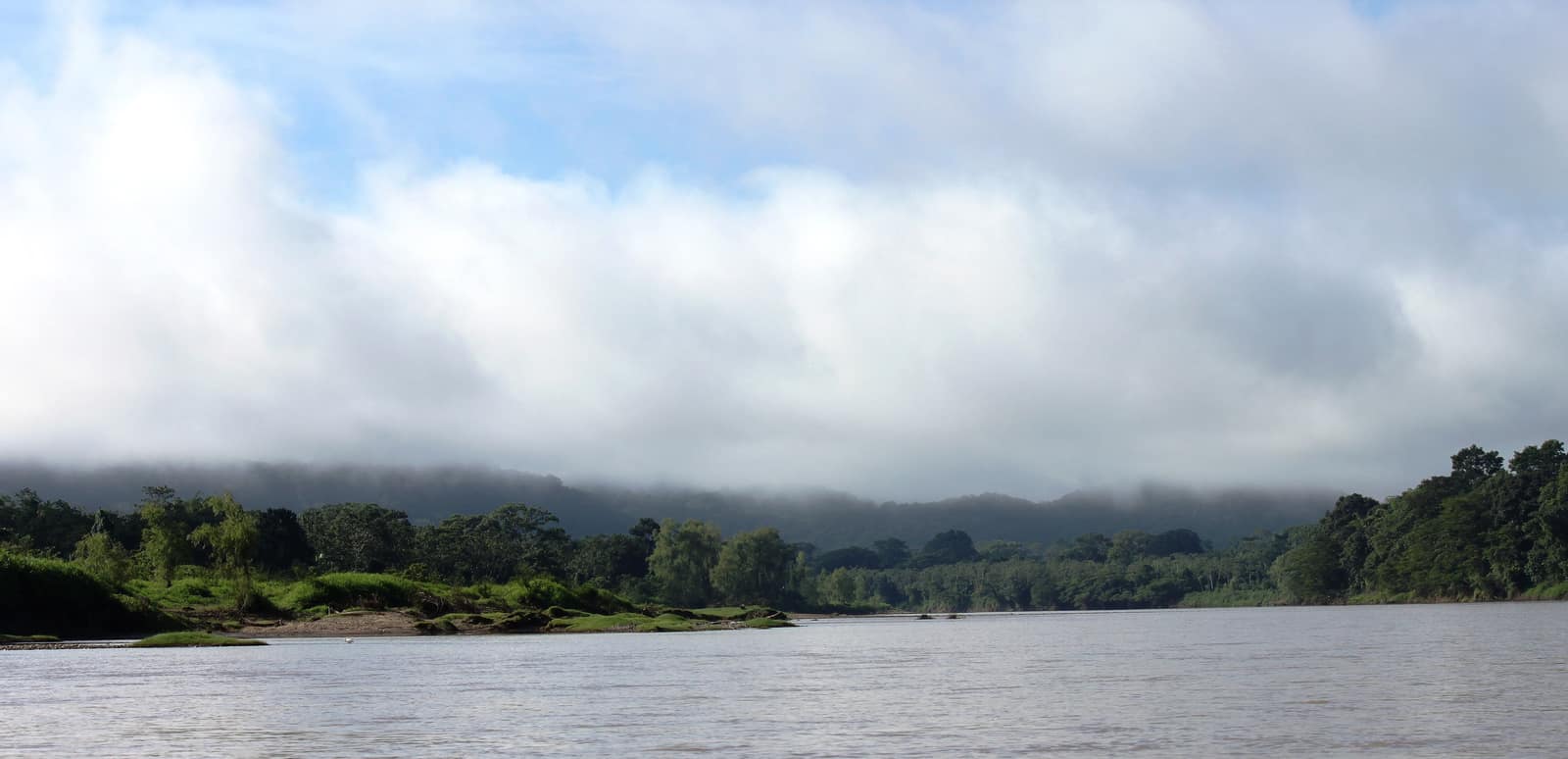
Honduras
By invitation
Mosquitia River Crossing
Río Plátano Biosphere
Only with a pre-vetted Mosquitia operator: river days in Río Plátano Biosphere under community protocols. Not an open itinerary—security screening required.
- Duration
- 12 days
- Effort
- Challenging
- Window
- Feb–May
On inquiry
Access →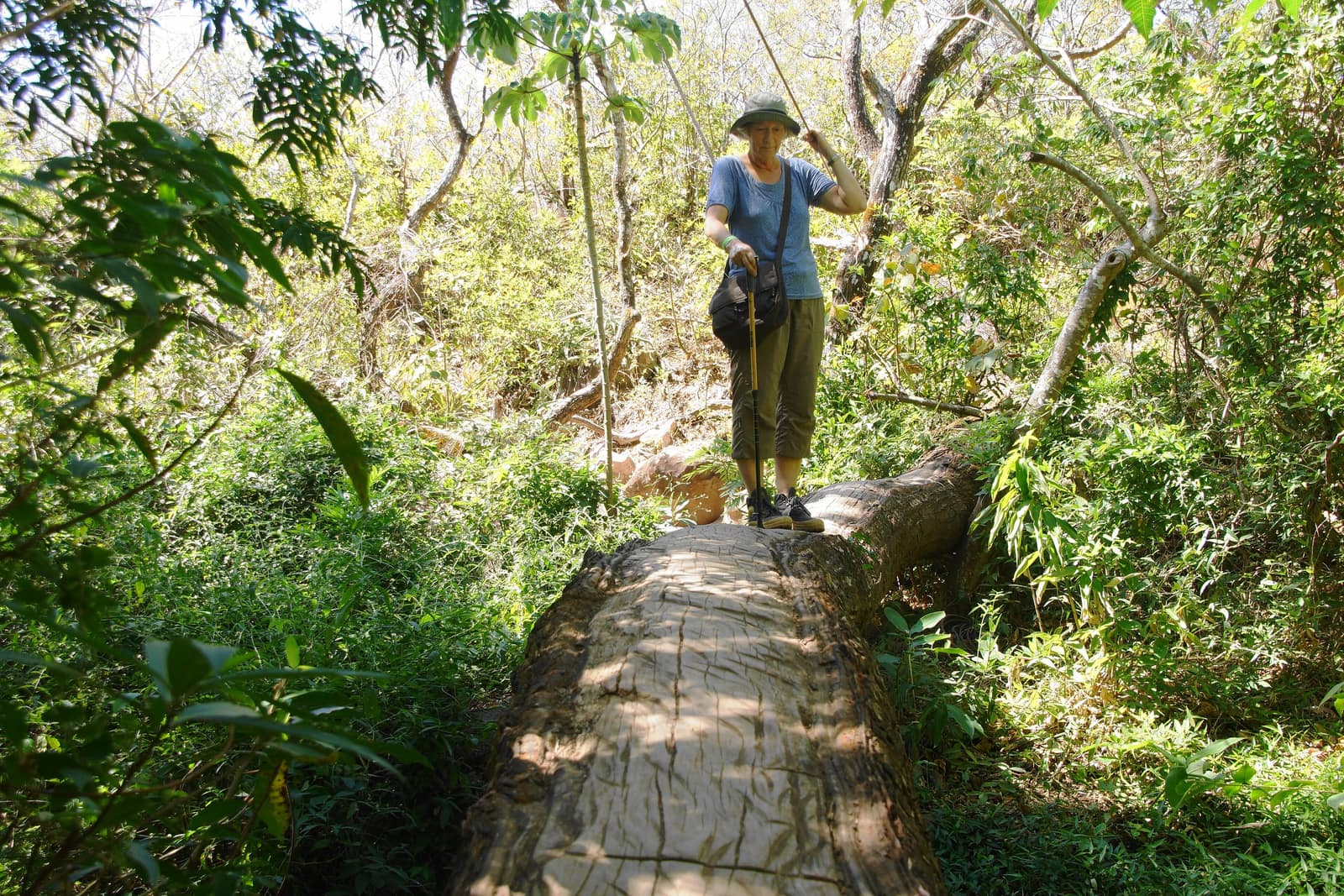
Costa Rica
Osa Peninsula Coast
Corcovado & Golfo Dulce
Primary rainforest meets Pacific beach where tapirs leave tracks in wet sand. Scarlet macaws cross the mouth of the gulf at dusk.
- Duration
- 9 days
- Effort
- Moderate
- Window
- Dec–Apr
$7,500–$11,000
Detail →From the ground
Frames from this route family and country — not a studio set, and not a promise of identical weather.